
Review · CANADA KAYAK TOURS
3 Day Algonquin Park Canoe Trip – Moose & Beaver Safari
The best part of this three-day Algonquin canoe trip is the distance you put between yourself and the park entrance. You paddle into the interior, camp beside the water, wake to loons, and search quietly for moose and beaver instead of simply looking at the park from a roadside stop. I especially like the small maximum group of eight and the fact that the guide supplies the bulky canoe and camping gear.
I also like the practical teaching. You learn how to handle a canoe, set up camp, cook outdoors, and read the park around you. The main caution is simple: this is not a soft adventure. You need moderate fitness, must handle paddling and portages, and should prepare seriously for mosquitoes. One German-language review was blunt about the insects, recommending DEET stronger than 30 percent.
Key points to know before booking
- Remote canoe camping: You paddle farther into Algonquin than most short park outings allow, with camping permits and selected campsites arranged for you.
- Small group of eight: One guide leads a compact group, making canoe instruction and wildlife spotting more personal.
- Wildlife focus: Moose and beaver searches are built into the trip, with a stated 90 percent observation success rate, though wildlife is never guaranteed.
- Food and equipment included: Canoes, tents, sleeping bags, sleeping pads, pillows, hammocks, meals, parking, and permits are provided.
- A real physical outing: Expect paddling, portaging, hiking, swimming, camp chores, and about 15 kilometers of canoeing back to Canoe Lake on Day 3.
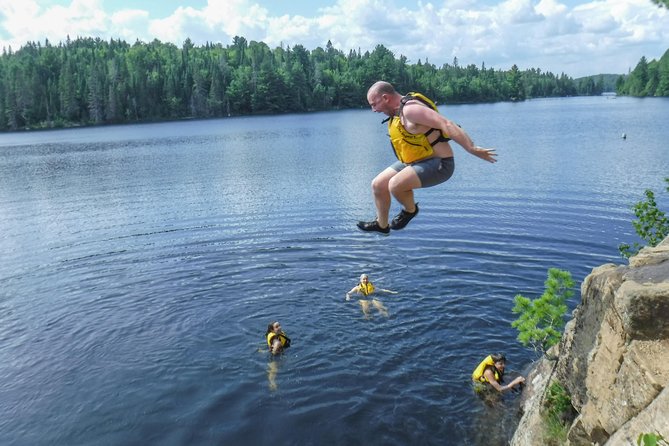
- Useful extras: Fishing, cliff jumping, wild berries, photographs, and a souvenir water bottle add variety, but some personal items and fishing gear are extra.
Why three days changes your Algonquin experience
Algonquin Provincial Park is often experienced from Highway 60, with quick walks to viewpoints and short lake outings. This trip gives you a different rhythm. You carry your gear into the park by canoe, stop when the group needs to, and spend enough time outside to notice the small changes in weather, light, bird calls, and water.
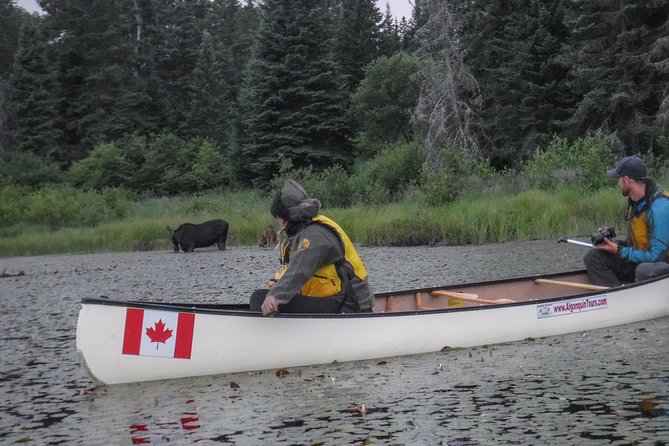
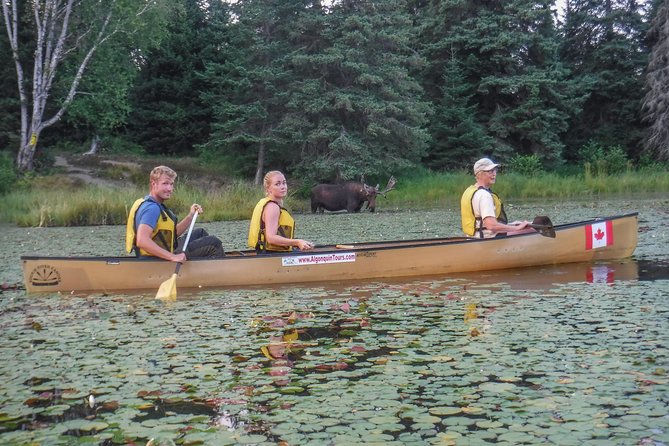
That extra time matters for wildlife. Moose and beaver are easiest to miss when a group is rushing. The plan includes early wildlife searches, and the second morning can begin at dawn in a canoe. Quiet water, low light, and patience give you a better chance than a quick daytime stop, although the advertised 90 percent success rate should not be read as a promise.
You also get time that is not tightly scheduled. Day 2 is designed as a full wilderness day. You might swim, hike, fish, read in a hammock, take photographs, or simply listen to loons. That freedom is valuable, but it means you should be comfortable with a slower, less structured day.
More Canoe Trips in Canada
- Banff National Park Big Canoe Tour
★ 5.0 · 303 reviews - From Toronto: Algonquin Park Canoeing & Hiking Adventure
★ 4.6 · 291 reviews - Banff National Park: Big Canoe River Explorer Tour
★ 4.7 · 286 reviews
Meeting at Canoe Lake and learning the basics
The trip begins at noon at the Canoe Lake Access Point Permit Office, at Highway 60, kilometer 14.1. You meet the guide and group on Canoe Lake beach, eat lunch, and receive canoe instruction before setting off. The starting point is also the ending point, and vehicle parking is included.
This first hour is more important than it may sound. If you have never handled a canoe, you need to learn how the boat responds, how paddlers coordinate, and how to carry yourself on the water. The guide provides the canoe, paddles, life jackets, and safety kit, so you do not need to buy or transport a full expedition setup.
Canoes are shared by three people. That arrangement keeps the boats stable and makes the trip more social, but it also means you should expect to paddle with companions rather than control your own craft. A small group helps here. A guide can watch how each canoe is moving and offer corrections before small mistakes become tiring habits.
Bring your lunch for the meeting period unless the operator has given you different instructions. The supplied details say the group meets and eats lunch at the access point before paddling into the park. From there, the first day takes about 10 hours, including the approach, instruction, canoe travel, and camp setup.
Day 1: paddling beyond Canoe Lake
The first paddle is your transition from an easy park visit to a wilderness trip. You pass across Canoe Lake and continue toward a more remote campsite, with portaging and other travel details handled as part of the route. The exact distance for the first day is not provided, so do not plan your energy around a precise mileage figure.
Your guide also introduces the basics of canoe camping. That can include how to organize your equipment, manage the shared camp, and settle into a site. Tents, sleeping bags with fresh liners, sleeping pads, and pillows are included. If you weigh more than 120 kilograms, the provided sleeping pad is a foam pad rather than an air pad.
The campsites are described as some of the best in Algonquin Park. You should still picture a genuine campsite, not a serviced campground. There is no promise of a cabin, electricity, or a prepared bed. You sleep in a tent and take part in the simple routines that make a backcountry stay work.
Meals are part of the package, with camp food prepared using organic produce from the operator’s local farm. The food is described as gourmet camp cuisine, but this remains outdoor cooking. Vegetarian, nut-free, lactose-free, and no-pork needs can be handled when given in advance. Vegan and gluten-free meals cost an additional 50 Canadian dollars plus 13 percent tax, so mention those needs early.
Day 2: dawn wildlife, swimming, and hammock time
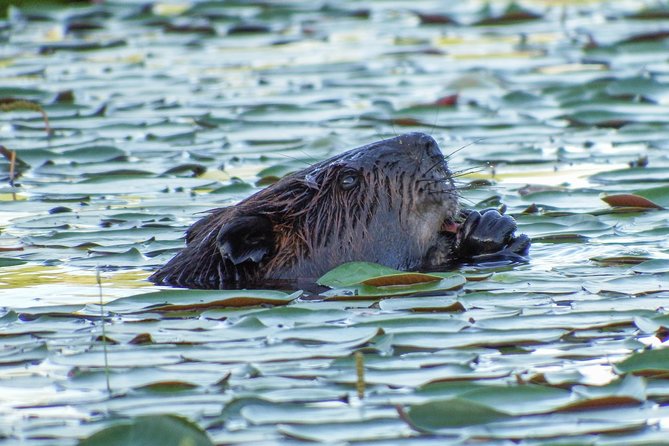
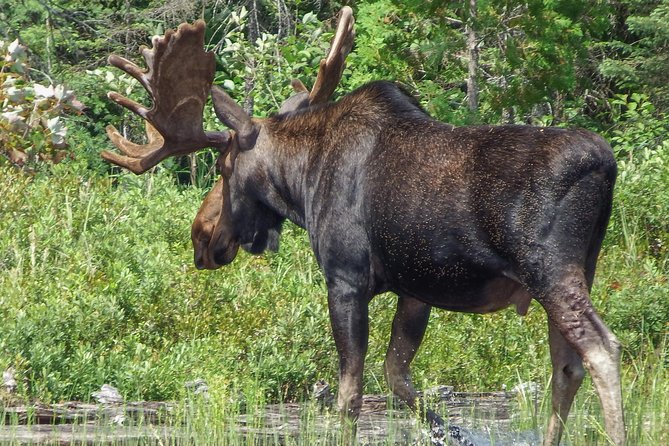
Day 2 is the heart of the trip. It begins with breakfast and can include an early canoe outing to look for animals. The most memorable wildlife option is the dawn paddle. You move across the lake while the park is quiet, watching shorelines and wetlands for moose and beaver.
The operator gives a 90 percent success figure for wildlife observation, but that should be treated as an average target, not a guarantee for your group. One review described a well-organized trip where the group did not see moose, despite the strong scenery. That is the right expectation: the search is part of the experience, and the park remains worthwhile even if an animal stays out of sight.
The rest of the day gives you unusual freedom for a guided trip. You can swim in clean lakes, hike, fish, read from a hammock, take photographs, or relax. Hammocks are supplied for each participant, and a bug jacket is also provided. A mesh dining shelter can be used if insects make meals unpleasant.
Fishing is available for bass and trout, with a stated 90 percent success rate. You must bring your own fishing kit or rent one, so confirm the rental details before arrival if fishing matters to you. Wild berries and other edible plants may also be pointed out when they are in season. Do not assume they will be available on every departure.
Cliff jumping is optional. It is a nice choice for confident swimmers, but you should not feel pushed into it. The trip works just as well if your ideal afternoon means staying in a hammock and watching the water.
Same water, a different day out on it:
- Three Sisters Sea Kayaking Day Tour
★ 5.0 · 275 reviews - Snorkel, Kayak, and Seal Adventure: Vancouver Boat Tour
★ 5.0 · 264 reviews - River Explorer | Big Canoe Tour in Banff National Park
★ 5.0 · 153 reviews - Banff: Wildlife on the Bow River Big Canoe Tour
★ 4.7 · 130 reviews
Day 3: packing camp and paddling 15 kilometers home
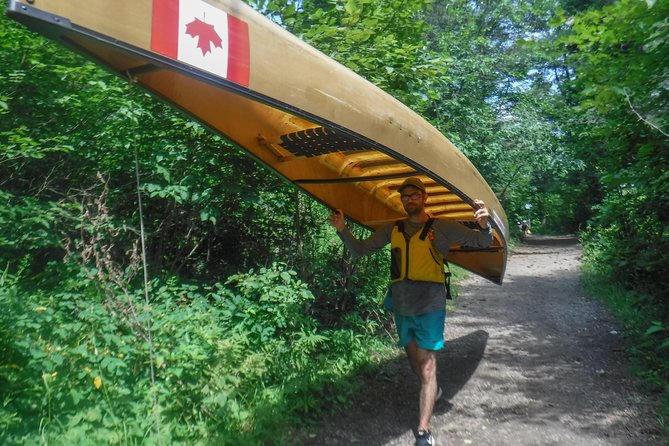
The final morning starts with breakfast while the guide prepares the meal and the group packs supplies. By this point, you should be more comfortable with the canoe and the camp routine. The return paddle to Canoe Lake is about 15 kilometers, which makes Day 3 the clearest test of your fitness and stamina.
The listed duration for the final day is about six hours. That is a manageable block for an active person, but the distance can feel different depending on wind, weather, group pace, and portages. You should arrive ready to paddle rather than treating the last day as a relaxed ride.
The trip finishes back at Canoe Lake beach and the original meeting point. Since no return transport is arranged, your parked vehicle is close at hand. That makes the final logistics easy, but you still need to arrive on time at the correct access point and allow room for the park drive.
What the guide and group size add
The group is limited to eight participants with one professional guide. That is a strong size for canoe camping. You are not part of a large flotilla, and the guide can give more attention to paddling technique, camp tasks, food restrictions, and wildlife viewing.
The guide is trained in naturalist work, wilderness first response, and food handling. Those credentials matter most when something goes wrong or when you need help reading the park, not just when someone points out a bird. The guide also manages permits, campsite planning, and the shared camp system.
One guide named Andrew is praised in the supplied material for teaching canoe skills, keeping the mood friendly, and helping with moose observation. Guides can change by departure, so you should not book on the assumption that Andrew will lead your date. Still, the trip clearly depends on an active guide who teaches rather than simply steers the group.
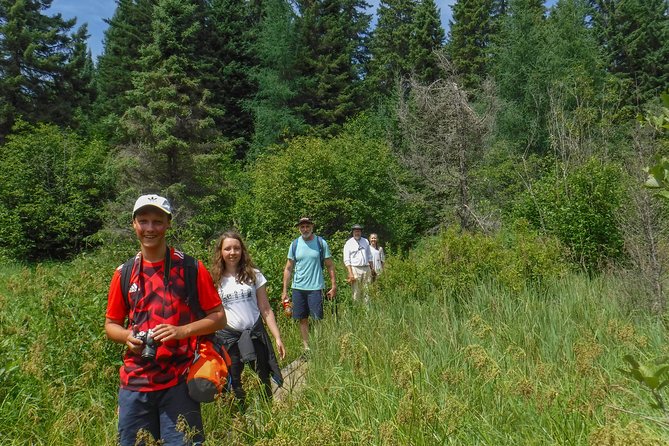
Meeting people is part of the design. The small group may include families, solo participants, and people from different countries. One family group included four children, which gave the outing a lively social feel. If you prefer complete privacy, this is not the right format. If you like sharing meals and canoe duties, the group size is a plus.
What the $555.96 price really covers
At $555.96 per person, the cost is higher than a simple day rental, but it covers much more than canoe access. You receive a canoe, paddle, life jacket, safety kit, tent, sleeping bag, fresh sleeping-bag liner, sleeping pad, pillow, hammock, bug jacket, meals, permits, parking, and a guide.
The value is strongest if you do not already own camping equipment. Buying or transporting a canoe, tent, sleeping system, safety gear, and cooking supplies for a three-day trip would quickly add cost and effort. The guide’s planning also removes the need to select a route, arrange campsites, or work out food for the group.
Some costs remain. Tips are not included, and the suggested guide tip is 5 to 10 percent of the tour cost, paid in cash. A flashlight, towel, fishing kit, and backpack or duffle bag are also not included, though the backpack or duffle can be rented. Advanced vegan or gluten-free food adds a fee.
The price is easier to justify if you want an organized first canoe-camping trip. It is less compelling if you already own all the gear, know Algonquin routes, and are happy to arrange permits and meals yourself.
What to pack, especially for insects and wet weather
Use a backpack or duffle bag suitable for canoe travel. A hard suitcase will be awkward, and the operator specifically lists a backpack or duffle as an item you need or can rent. A flashlight and towel are also on the not-included list.
Mosquito protection deserves serious attention. Reviews describe heavy mosquito activity, and the supplied bug jacket does not replace repellent. Bring strong insect repellent, with DEET above 30 percent specifically recommended in one account, along with clothing that covers your arms and legs.
You should also bring clothing that can handle paddling, hiking, swimming, and changing temperatures. Pack a towel, since it is not provided, and plan for wet gear. A personal water bottle is useful, though a souvenir water bottle is included.
Tell the operator about diabetes, heart conditions, serious allergies, or other health concerns before the trip. The group needs this information for food planning and safety. You should also disclose dietary restrictions well ahead of time, especially vegan or gluten-free requirements.
Who will enjoy this trip most
I would recommend this outing to an active beginner who wants to learn canoe camping without buying a full kit. It also suits families with older children who can manage paddling, camp routines, and a long final day. The supplied information does not set a minimum age, so ask the operator before booking for young children.
It is a good fit for people who want both activity and downtime. You can paddle, portage, hike, swim, fish, and look for wildlife, then spend part of Day 2 reading in a hammock. It is not ideal for someone seeking a resort-style break, fixed indoor facilities, or guaranteed animal sightings.
You also need to accept shared responsibility. The guide handles the route and safety structure, but participants help pack supplies and live with the basics of outdoor camping. Moderate fitness is required, and the return paddle makes this more than a casual canoe rental.
The tour is recommended by 100 percent of the published responses and has a 4.9 rating from 27 reviews. That is a strong signal, but your own enjoyment will depend on your comfort with mosquitoes, shared camping, and physical effort.
Should you book the Algonquin canoe trip?
Book it if you want a practical, guided route into Algonquin Park and do not own the equipment. The small group, included camping kit, camp meals, naturalist instruction, and time for dawn wildlife searches give you a lot for the price.
Think twice if you dislike insects, need private accommodation, or want an easy sightseeing trip. Also check the weather and cancellation terms before committing. You can cancel for a full refund up to three full days before the start time, while poor weather or failure to meet the minimum group size can lead to a new date or full refund.
For the right person, this is a strong introduction to canoe camping: active, social, well supplied, and far more connected to Algonquin than a short paddle from the highway.
FAQ
Where does the Algonquin canoe trip start?
You meet at the Canoe Lake Access Point Permit Office on Highway 60 at kilometer 14.1, in Algonquin Provincial Park. The group also meets on Canoe Lake beach.
What time does the trip start?
The start time is 12:00 pm on Day 1.
How long does the experience last?
The trip lasts approximately three days. Day 1 is listed at about 10 hours, Day 2 at about 14 hours, and Day 3 at about six hours.
How many people can join the group?
The maximum group size is eight participants with one guide.
Is canoe equipment included?
Yes. Canoe equipment includes the canoe, paddle, life jacket, and safety kit. Canoes are shared by three people.
Is camping equipment included?
Yes. A tent, sleeping bag with a fresh liner, sleeping pad, and pillow are included. A foam sleeping pad is supplied for participants over 120 kilograms.
Are meals included?
Breakfast, lunch, and dinner are included. Vegetarian, nut-free, lactose-free, and no-pork restrictions can be accommodated with advance notice. Vegan and gluten-free meals cost an extra 50 Canadian dollars plus 13 percent tax.
Can I fish or go cliff jumping?
Fishing for bass and trout is available, but you must bring your own fishing kit or rent one. Cliff jumping is optional, and swimming in the park’s lakes is included as part of the activities.
What happens if the tour is canceled?
If poor weather causes cancellation, you can receive a different date or a full refund. If the minimum number of participants is not met, you can receive a different date or experience, or a full refund.
More 3-Day Experiences in Canada
- Algonquin Park 3-Day Deluxe Camping & Canoeing Adventure
★ 4.5 · 52 reviews - All-Inclusive 3 Day/2 Night Halong Luxury Cruise Meals, Cave, Kayaking, Swimming
★ 5.0 · 346 reviews - From Lan Ha Bay: 3-Day 2-Night Cruise with Meals & Kayaking
★ 4.5 · 131 reviews - Stockholm: 1, 2, or 3-Day Kayaking Tour in the Archipelago
★ 4.8 · 17 reviews
More Safari in Canada
- Algonquin Park: Canoe Camping Safari
★ 4.9 · 16 reviews - Tenerife: Kayak Safari and Snorkel in a Marine Reserve
★ 4.5 · 3,214 reviews - Tenerife: Kayak Sea Safari with Snorkel and Snacks
★ 4.8 · 639 reviews - Dublin Bay Seal Kayaking Safari at Dalkey
★ 5.0 · 380 reviews
Just added around Canada
- Wildlife on the Bow | Big Canoe Tour★ 4.5 · 13 reviews
- Banff National Park Big Canoe Tour★ 5.0 · 52 reviews
- Intro to Stand Up Paddleboarding, Banff National Park★ 5.0 · 35 reviews
- Banff National Park- Double Kayak Experience★ 5.0 · 17 reviews
- Algonquin Park 3-Day Deluxe Camping & Canoeing Adventure★ 4.5 · 52 reviews
- Algonquin Park 4-Day Deluxe Camping & Canoeing Adventure★ 5.0 · 33 reviews
- Toronto Islands: Voyageur Canoe Tour★ 4.6 · 10 reviews
- Telegraph Cove: Half-Day Kayaking Tour★ 4.7 · 9 reviews
Canada Kayak Tours, compared.
From Toronto: Algonquin Park Canoeing & Hiking Adventure
Read our review →
Banff National Park: Big Canoe River Explorer Tour
Read our review →
Snorkel, Kayak, and Seal Adventure: Vancouver Boat Tour
Read our review →
River Explorer | Big Canoe Tour in Banff National Park
Read our review →
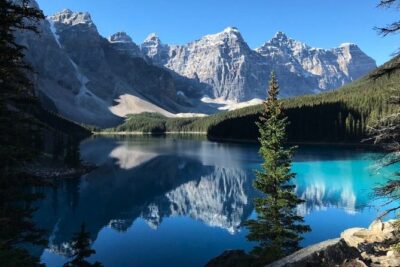
Banff/Canmore Moraine Lake & Lake Louise– Hike, Canoe or Sightsee
Read our review →Browse the lists this tour appears in