
Review · UK KAYAK TOURS
Group Kayak Experience on the beautiful Thames at Richmond
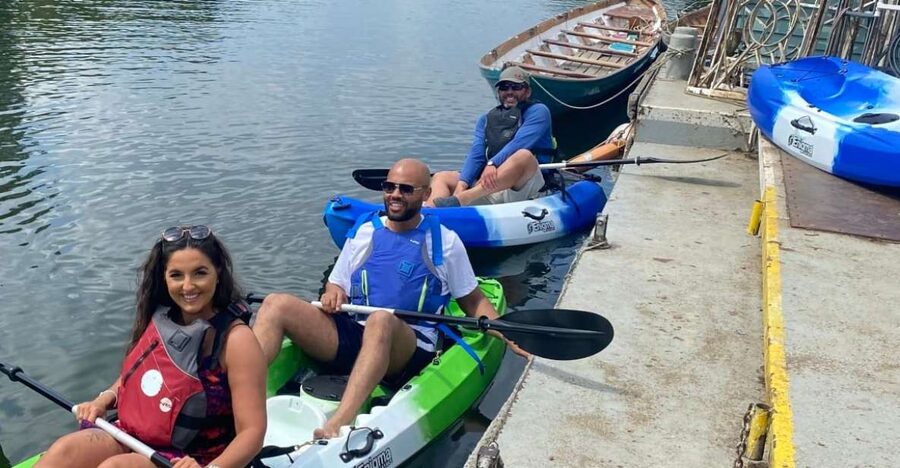
The best part of this Richmond kayak trip is the setting: you start beneath Richmond Bridge and quickly trade the towpath for the quiet movement of the River Thames. In a two-hour session, you learn the basics in a sit-on-top kayak, then head out with the tide toward places such as Eel Pie Island, Teddington, Kew Gardens, or Richmond Lock.
I like the small groups of no more than six, since an instructor can keep a close eye on beginners and still give stronger paddlers room to improve. I also like the clear, practical teaching, including steering, stopping, navigation, and self-rescue. The main drawback is the lack of changing and shower facilities, so arrive dressed to paddle and plan to wash thoroughly at your accommodation if you get wet.
Key points before you book
- Meet beneath Richmond Bridge: The start point is under the bridge, beside the boathouses and near the river.
- Expect 15 to 20 minutes on land: The safety talk and paddle practice happen on the riverbank or a nearby pontoon.
- The route follows the tide: Your direction may be upstream toward Eel Pie Island and Teddington, or downstream toward Richmond Lock, Kew Gardens, and Chiswick.
- Sit-on-top kayaks suit first-timers: You receive instruction in steering, stopping, paddling technique, and self-rescue.
- Six people is the maximum: The group size gives the session a more personal feel than a large commercial outing.
- Bring your own practical kit: Wear paddle-ready clothes, pack a towel and waterproof bag, and use biodegradable sunscreen.
Starting under Richmond Bridge
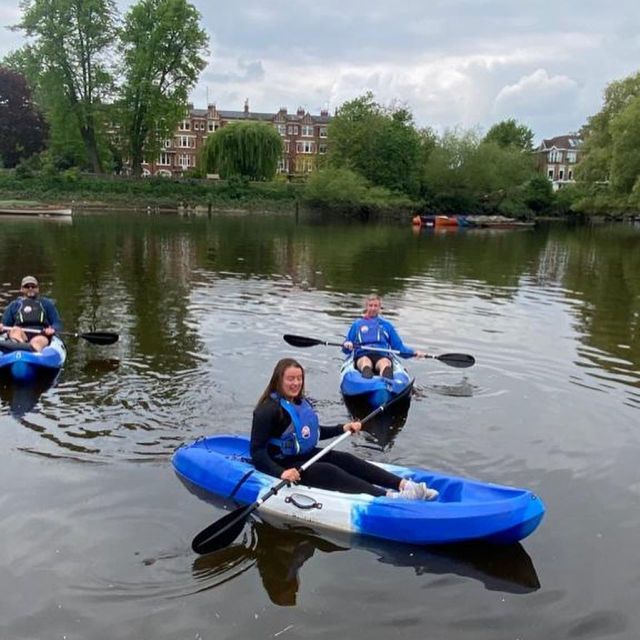
Your session begins at the arch under Richmond Bridge, right beside the boathouses. This is a useful meeting point because it puts you directly beside the water, with no long walk from a distant launch site.
I would arrive with your paddling clothes already on. Space for changing is very limited, and the operator specifically advises against treating the meeting point as a proper changing room. Bring only what you need, and keep valuables in a waterproof bag.
The first part takes place on land or on the pontoon. Allow around 15 to 20 minutes for this section. The exact length depends partly on group size, but with no more than six people, the instructor should have time to deal with basic questions rather than rushing through a standard speech.
This opening is not filler. You learn how the equipment works, how to sit in the kayak, and how to handle the paddle. You also cover river safety and navigation, which matter on the Thames even during a relaxed outing. If you are new to kayaking, this is the part that helps you get your bearings before you leave the bank.
A few more paddling days around the UK worth a look
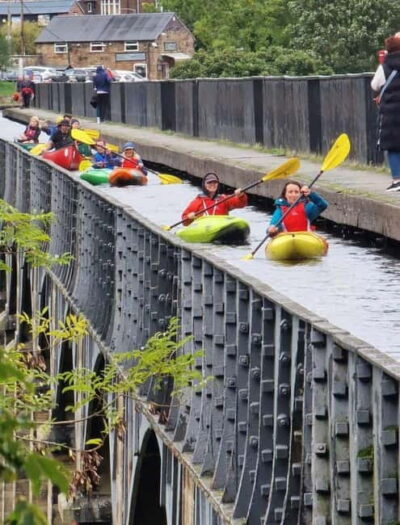
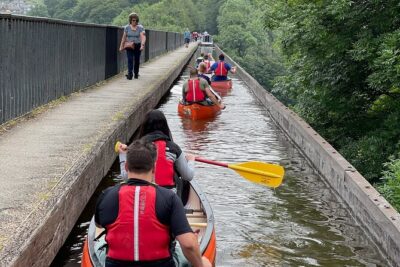
- Pontcysyllte Aqueduct Canoe Tours in Llangollen
★ 5.0 · 2,229 reviews - Canoe Trip Over the Pontcysyllte Aqueduct
★ 5.0 · 258 reviews - Sea Kayak Lesson & Tour in Newquay
★ 5.0 · 189 reviews
What the safety lesson covers
The instruction focuses on useful actions rather than theory. You learn how to steer, how to stop, and how to manage a self-rescue. Those skills give beginners a better sense of control once the kayak is moving.
A sit-on-top kayak is a sensible choice for a first session. You are not enclosed inside the boat, and the design makes the basic handling easier to understand. It also means you need to accept the possibility of getting splashed, particularly if the wind or tide picks up.
The safety briefing also covers navigation. The Thames is not simply a flat-water practice pond, so knowing how to move responsibly on the river is part of the experience. Your instructor will explain the relevant safety points before the group sets off.
Instructors may include Peter, Nigel, Harry, or Sarah. The teaching is presented in a calm, professional way, with particular praise directed at Sarah’s instruction and at Nigel and Harry’s ability to explain kayaking clearly. That is useful information for beginners, who usually benefit more from patient correction than from a fast-paced technical lesson.
Setting off on the Thames
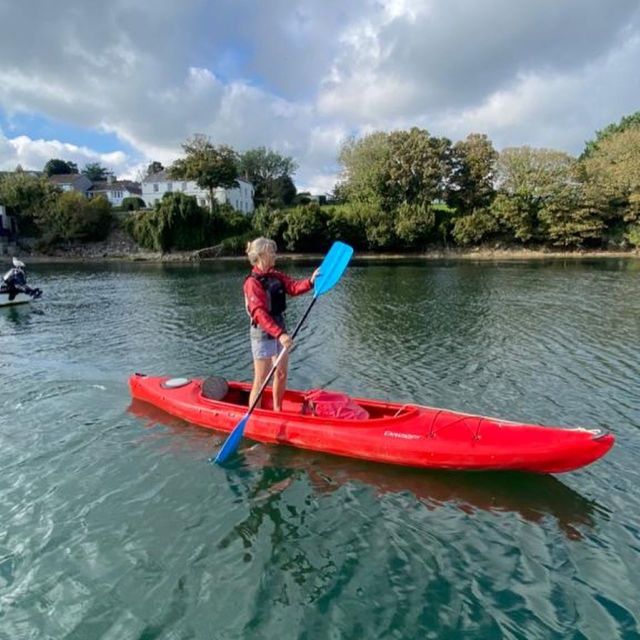
Once the land-based practice is done, you head onto the river. The route is not fixed in advance because it depends on the tide and the wind on the day.
If conditions take you upstream, the group may paddle toward Eel Pie Island and Teddington. If you go downstream, the route may lead toward Richmond Lock, Isleworth, Kew Gardens, and Chiswick. The names give you a good sense of the area you may see, but you should not treat them as guaranteed stops or assume the group will reach every place.
This flexible routing is one of the more sensible features of the trip. The instructor can respond to the river instead of forcing the same distance and direction in every session. The tradeoff is that you cannot book this as a precise sightseeing route. The distance covered depends on wind, tide, and the conditions on the day.
You may find that the river itself becomes the main attraction. From a kayak, Richmond looks different from the view along the bank. You are close to the water, moving at a human pace, and able to pay attention to the changing current and the shape of the river rather than simply passing through by road or footpath.
Upstream toward Eel Pie Island and Teddington
The upstream option takes you toward Eel Pie Island and Teddington. These are named route points rather than promised landings, so expect to paddle past or toward them rather than stop for a formal visit.
This direction can suit you if you want a longer look at the upper part of the Richmond stretch. It also gives the instructor a chance to adjust the pace to the group. Stronger paddlers may find the session comfortably active, while beginners can concentrate on clean strokes and steering without needing to cover a fixed distance.
Eel Pie Island adds a distinctive local reference to the route, but the real value is the chance to see this section of the Thames from the water. Teddington marks the upper end of the possible route, though the distance reached will depend on conditions and the group’s pace.
Do not expect a full-day expedition. Two hours passes quickly, and some of that time is spent on the bank. Still, the format works well for a first attempt or for a short activity added to a day in Richmond.
Same water, a different day out on it:
- Paddleboarding Around Newquay’s Coastline
★ 5.0 · 117 reviews - Llangollen: Aqueduct Kayak or Canoe Cruise
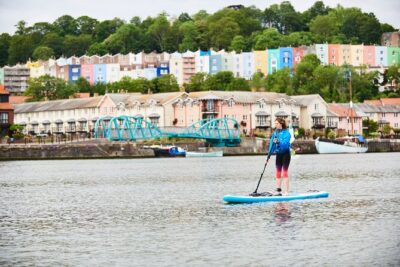
★ 4.7 · 116 reviews - Bristol Paddleboarding Tour
★ 5.0 · 92 reviews - Small Group Pontcysyllte Aqueduct Canoe Trip
★ 5.0 · 91 reviews
Downstream toward Richmond Lock and Kew
The downstream option may take you toward Richmond Lock, Isleworth, Kew Gardens, and Chiswick. Again, the tide decides much of the plan, so the group may cover only part of this stretch.
This direction offers a different feel from the upstream route. The tide may help the group make progress, but wind and river conditions still affect the distance. You are not promised a sightseeing circuit, and the instructor’s first job is to keep the session safe and manageable.
Kew Gardens and Chiswick are especially useful route markers for anyone hoping to connect the kayaking session with a wider day in southwest London. The kayak activity ends back at the meeting point, however, so plan your onward time around the return to Richmond rather than assuming you will finish downstream.
The return to the arch under Richmond Bridge is important for simple planning. You do not need to arrange a separate pickup or work out how to get back to the start. Transportation to Richmond is not included, so you make your own way there and back.
How much time do you spend paddling?
The total duration is two hours. The first 15 to 20 minutes usually cover the safety briefing and land-based training, leaving roughly 100 to 105 minutes for the water portion if the session follows that normal rhythm.
That is enough time to learn basic handling and enjoy a proper stretch of river, but it is not enough for an ambitious sightseeing tour. I would book this for a focused introduction to kayaking, not as a way to visit several riverside attractions in detail.
The small group helps here. With six participants or fewer, the instructor can spend time correcting technique and answering questions. It also reduces the chance that a beginner will feel lost in a large crowd of boats.
The session is suitable for beginners and advanced paddlers, but the meaning is different for each. A beginner gets structured tuition and an easy introduction to the equipment. An experienced paddler gets time on a beautiful part of the Thames, though anyone seeking advanced coaching should confirm the level of instruction when booking.
What the $87.55 price gets you
At $87.55 per person, this is not the cheapest way to spend two hours beside the Thames. The price makes more sense when you count the equipment, instructor, safety briefing, and guided river time together.
You are not paying simply for kayak hire. The tuition covers paddle technique, steering, stopping, navigation, and self-rescue. That instruction has real value if you have never used a kayak before, since renting a boat without guidance would leave you to work out the basics yourself.
The maximum group size of six also improves the value. A larger outing could offer a lower price, but it would usually provide less direct attention. Here, your money goes toward a short, organized lesson with a qualified instructor and a route adjusted to river conditions.
Food, drinks, and transportation are not included. That keeps the activity straightforward, but you should budget for your own journey to Richmond and any meal or drink before or after the session. Since the activity ends where it begins, you can easily pair it with your own plans around Richmond.
What to wear and pack
The practical details matter more here than they do on a standard walking tour. You should arrive in weather-appropriate clothing that you are willing to paddle in and possibly get wet.
Pack:
- Biodegradable sunscreen
- A waterproof bag
- A towel
- Clothing suited to the weather
- Clothes you can paddle in from the start
There are no shower facilities at Richmond. If you fall in or get splashed, you need to wash thoroughly afterward, and any open cuts should be covered. This is worth taking seriously because the Thames is a working river, not a swimming pool.
A towel is useful even if you stay upright. Water can reach the kayak, paddle, and clothing, and the weather may change during the two-hour session. A waterproof bag protects small essentials, but do not bring items you cannot afford to get wet.
The biodegradable sunscreen request is also practical. You will be out on open water, where reflected light can increase your exposure, and the product you use can reach the river.
Who will enjoy this Richmond kayak session?
This is a good fit for a first-time kayaker who wants instruction without committing to a full-day course. The short duration keeps the activity manageable, while the safety briefing covers the basic skills you need to feel more secure on the water.
It also suits couples, friends, and small groups who want an active break from sightseeing. The group limit of six makes it easier to share the experience without being swallowed by a large organized crowd.
Families and mixed-ability groups should check the booking details before reserving, since the supplied information confirms suitability for beginners and advanced paddlers but does not give age, weight, or medical requirements. Those details should be confirmed directly if they affect your choice.
Experienced paddlers may enjoy the river setting and the chance to paddle a route shaped by the tide. Still, if you want a demanding training session or a precise distance, this may feel too gentle and too dependent on conditions.
Booking flexibility and timing
You can cancel up to 24 hours in advance for a full refund. That is helpful for an outdoor activity, since wind and rain can change your plans, though the exact weather decision process is not given.
You can also reserve your place and pay later. This is useful if you are arranging several activities and want to secure a spot before paying. Starting times vary, so check availability for the date you want rather than assuming a fixed departure time.
Instruction is in English. The activity begins and ends at the same Richmond Bridge meeting point, and the listed price is per person.
Should you book this Thames kayaking experience?
Book it if you want a short, well-organized introduction to kayaking in a scenic Richmond setting. The strongest reasons are the small group, practical instruction, and flexible route, with Peter, Nigel, Harry, or Sarah potentially leading the session.
Skip it if you need showers, generous changing space, a guaranteed route, or a full day on the water. You should also be comfortable with the possibility of getting wet and with washing thoroughly afterward away from the meeting point.
For most beginners, the $87.55 price is fair because it includes the boat, equipment, safety training, and guided river time. I would choose it for an active Richmond afternoon, especially when you value hands-on instruction more than a fixed sightseeing itinerary.
FAQ
Where does the kayaking session start?
Meet at the arch under Richmond Bridge, next to the boathouses.
Where does the activity finish?
The session ends back at the same meeting point under Richmond Bridge.
How long does the experience last?
The kayaking experience lasts two hours. The safety briefing and land-based training generally take 15 to 20 minutes.
Is this activity suitable for beginners?
Yes. The session is designed for both beginners and advanced paddlers, with instruction in basic kayaking skills and river safety.
What will I learn before going onto the river?
You learn about the equipment, river safety, navigation, paddle technique, steering, stopping, and self-rescue.
Which route will the group take?
The route depends on the wind and tide. You may go upstream toward Eel Pie Island and Teddington, or downstream toward Richmond Lock, Isleworth, Kew Gardens, and Chiswick.
Are showers available at Richmond?
No. There are no shower facilities at Richmond, so you should wash thoroughly afterward if you fall in or get splashed.
Can I cancel my booking?
Yes. You can cancel up to 24 hours in advance for a full refund. You can also reserve your place and pay later.
Just added around the UK
- Stand Up Paddle Boarding in Aberfeldy★ 5.0 · 12 reviews
- Torquay: Guided Wildlife, Bushcraft, Sea Cave Kayak Safari★ 4.6 · 32 reviews
- Tenby: Guided Kayaking Adventure★ 4.8 · 22 reviews
- Stackpole Quay: Paddle Boarding Tour★ 4.9 · 13 reviews
- Pembrokeshire: Paddle Boarding At Tenby North Beach★ 4.9 · 10 reviews
- Paddleboard Experience on the beautiful Thames at Richmond★ 5.0 · 7 reviews
- Norwich: Norfolk Broads Stand-up Paddleboard Rental★ 5.0 · 8 reviews
- Newquay: Sea Kayaking Tour★ 4.7 · 12 reviews
UK Kayak Tours, compared.
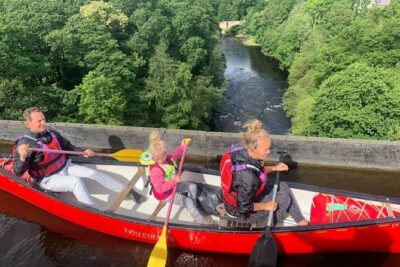
Pontcysyllte Aqueduct Canoe Tours in Llangollen
Read our review →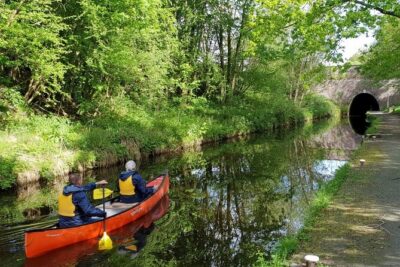
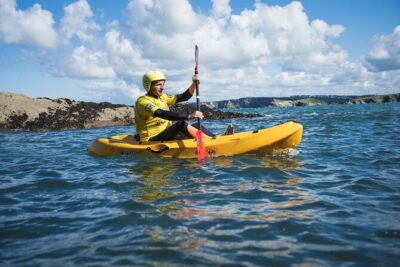
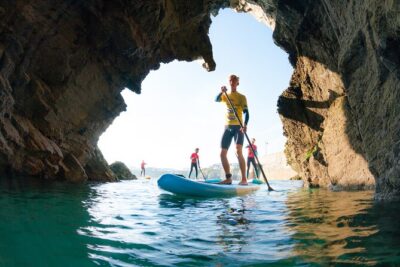
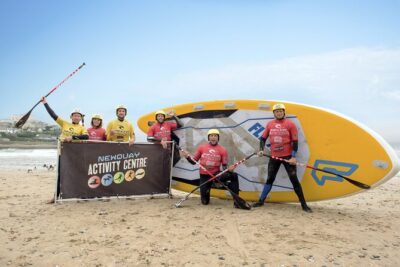
Giant Stand Up Paddle Boarding Experience in Newquay
Read our review →Browse the lists this tour appears in