
Review · NEW ZEALAND KAYAK TOURS
Akaroa: 4WD Safari and Guided Sea-Kayaking Experience
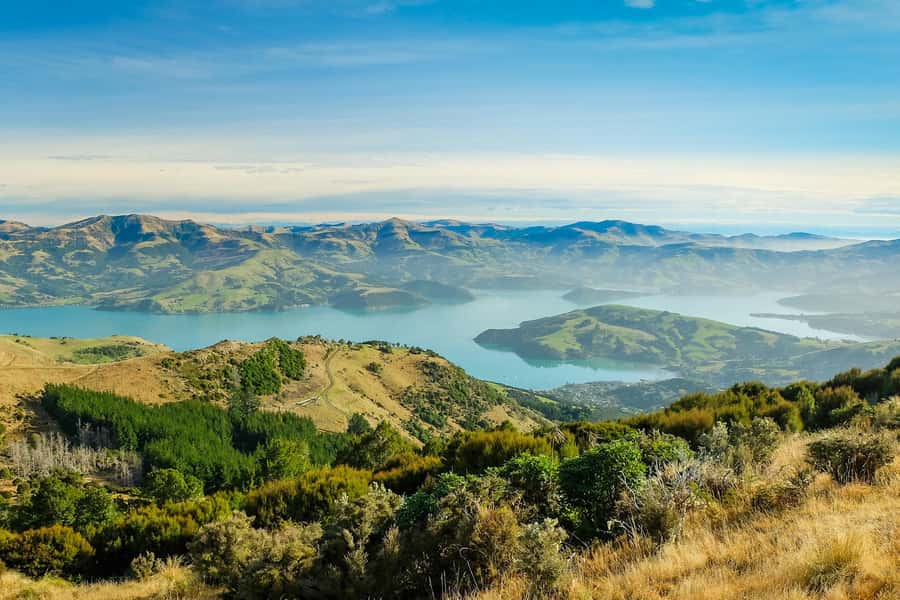
Pōhatu Marine Reserve gives you a rare two-part outing: a rough-road ride over Akaroa’s volcanic rim, followed by kayaking beneath high cliffs and into sea caves. Penguins, fur seals, dolphins, and seabirds may appear close to your boat, while the Flea Bay Island arch provides one of the trip’s most memorable views. I like the mix of land and sea, and I like that guides such as Ben, Kevin, and Vila bring real care to local conservation. The main consideration is weather: rough water can shorten or cancel the kayaking.
I also like the relaxed pace. You spend roughly 40 minutes reaching Flea Bay, then about 1 to 1.5 hours on the water, with time for commentary and wildlife watching rather than nonstop paddling. The $80 price is fair for transport, equipment, a guide, and a four-and-a-half-hour outing, but you should bring food for an afternoon departure because shops and restaurants may be closed when you return.
Key points to know before booking
- The drive is part of the attraction: A 4WD minivan crosses the Akaroa volcanic crater rim on the way to remote Flea Bay.
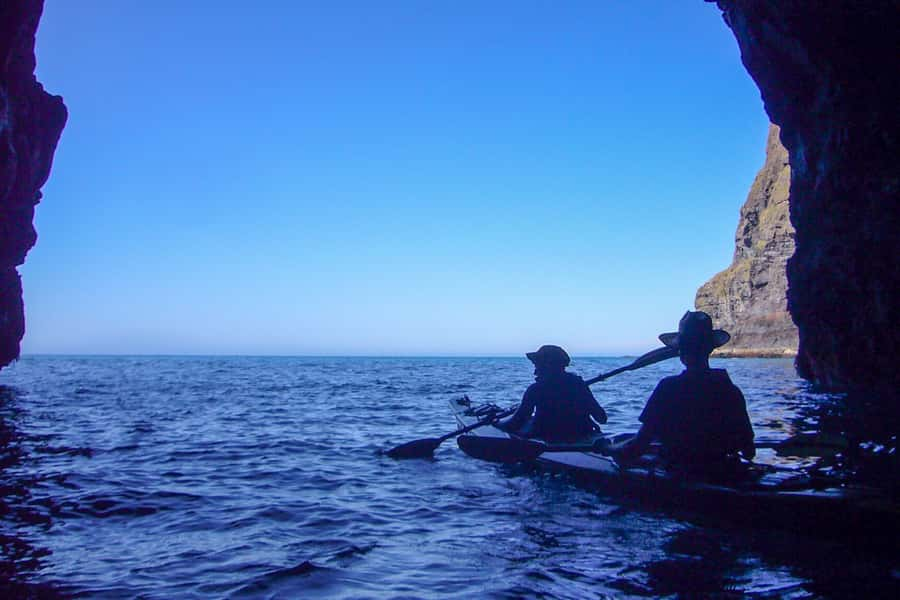
- You paddle beneath dramatic rock: Expect cliffs, reefs, rock stacks, sea caves, and the Flea Bay Island arch.
- Wildlife sightings are possible, not promised: Penguins, seals, dolphins, and seabirds are all part of the reserve, but nature sets the schedule.
- No kayaking background is required: You use stable double kayaks and receive guidance, safety instructions, and all essential gear.
- The afternoon trip includes photo stops: The morning option is better for an early start, while the afternoon departure adds scenic roadside pauses.
- Sea conditions control the plan: The guide can limit the route, stop kayaking, or replace it with a land-based wildlife visit when needed.
From Akaroa to remote Flea Bay
The trip begins before St Peter’s Church in Akaroa. From there, you leave the waterfront behind and ride toward Pōhatu Flea Bay in a 4WD minivan.
This is not just a transfer. The road crosses the rim of the Akaroa volcano, giving you a changing view of Banks Peninsula’s folded hills, bays, and open coast. The route helps explain why this outing feels different from a short harbor cruise. You are heading toward the exposed outer coast, where the sea has cut into volcanic rock over time.
The vehicle is a minivan with four-wheel drive, not a luxury coach. That matters because the road to Flea Bay is part of the remote setting. If you prefer a polished sightseeing bus with a smooth, predictable ride, this may feel basic. If you enjoy seeing how a place is reached and hearing local stories along the way, it adds useful context.
Guides including Ben, Kevin, Vila, and others have been praised for explaining the plants, wildlife, conservation work, and history of the area. You can expect live commentary in English during the drive. The most useful part is not a list of facts, but the connection between the land route and the wildlife you later see from the kayak.
The afternoon departure includes photo stops, giving you more chances to pause on the way. The early morning option suits you if you want cooler conditions and an early start, but it does not include the same listed photo-stop arrangement. Check the departure time carefully when booking.
A few more paddling days around New Zealand worth a look
- Tenerife: Kayak Safari and Snorkel in a Marine Reserve
★ 4.5 · 3,214 reviews - Tenerife: Kayak Sea Safari with Snorkel and Snacks
★ 4.8 · 639 reviews - Dublin Bay Seal Kayaking Safari at Dalkey
★ 5.0 · 380 reviews
Arriving at Pōhatu Marine Reserve
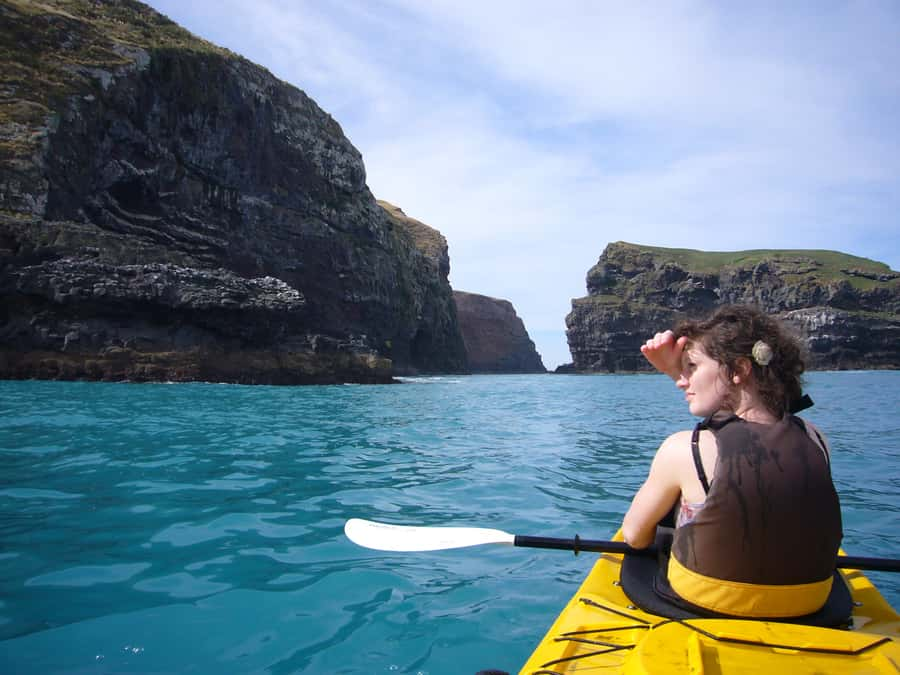
Flea Bay feels quiet and remote compared with Akaroa. The reserve’s outer coast is marked by steep volcanic cliffs, reefs, rock stacks, and water-worn caves. From the shore, you begin to see why kayaking works so well here: a small boat can approach angles and openings that are difficult to appreciate from land.
The scenery is impressive even if wildlife stays out of sight. Tall cliffs frame the water, and the rock formations give the paddle a sense of movement. You are not simply crossing a bay. You are tracing the edge of a rugged marine reserve.
The Flea Bay Island arch is one of the key sights. Reaching it depends on settled conditions, so it is best treated as a possibility rather than a guaranteed stop. If the sea is calm enough, the arch gives you a particularly good view of the volcanic coast and makes the outing feel more exploratory.
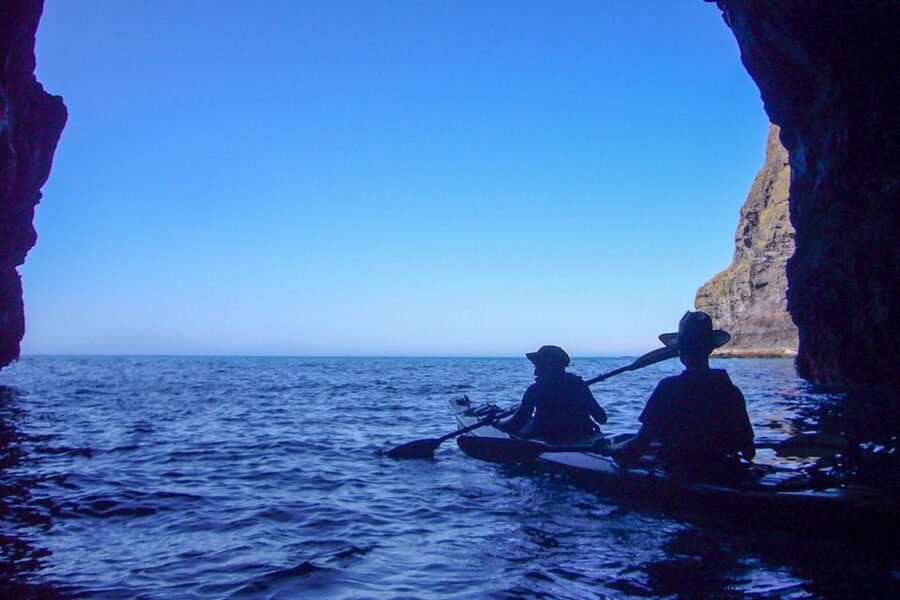
Sea caves are another highlight. The guide may take you toward or into a cave when the water is calm and safe. That qualification matters. Conditions can change quickly along an exposed coast, and the guide has the final say on how close you go and how long you stay.
Getting into the double kayaks
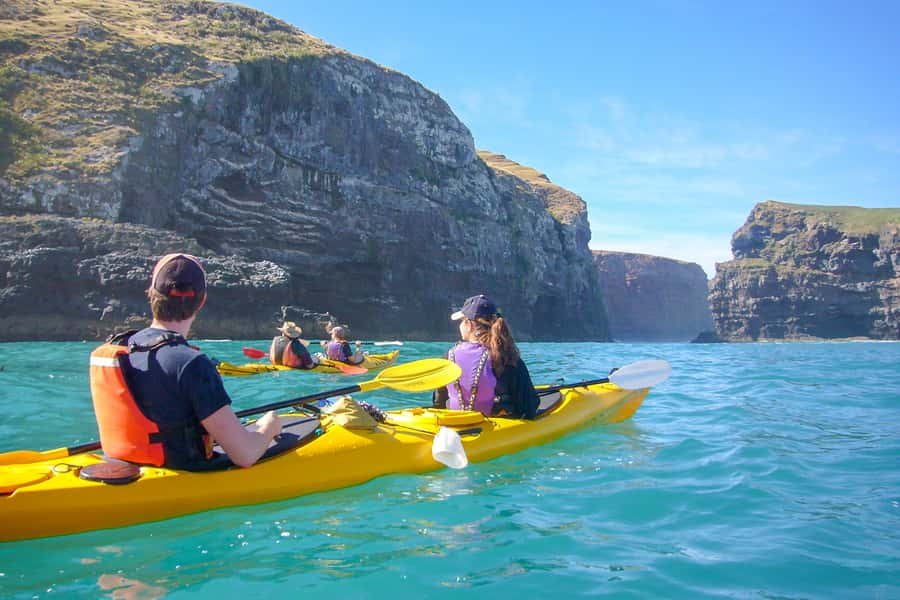
After the drive, you receive the equipment and prepare for the water. The package includes a life jacket, dry jacket, spray deck, dry bags, and the help of an experienced kayak guide.
You paddle a double kayak, which means you share the work with a partner. No previous kayaking experience is required, but you still need to listen carefully and follow instructions. The guide decides if the conditions are safe for you, and that decision can depend on wind, waves, fitness, and your comfort in the boat.
The kayaking section lasts around 1 to 1.5 hours. That is enough time to explore the coast without turning the outing into an endurance test. The actual route can be shorter or longer depending on the sea and the wildlife activity.
Wear shorts or leggings rather than jeans. Jeans become heavy and uncomfortable when wet, and you should expect some spray even in good conditions. Bring a change of clothes, a towel, comfortable layers, a hat, sunglasses, water, and biodegradable sunscreen. Layers are useful because the air may feel different on the drive, at the shore, and on the open water.
The gear reduces the need to pack specialist equipment, which helps explain the value of the $80 price. You are paying for transport into a remote area as well as the guided paddle. Food and drink are not included, so pack water and a snack.
Wildlife from the water
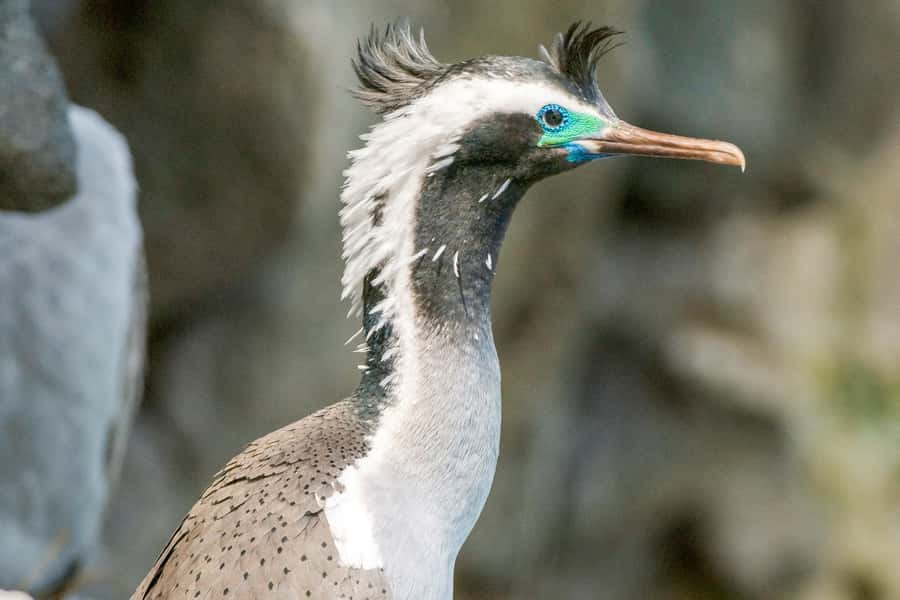
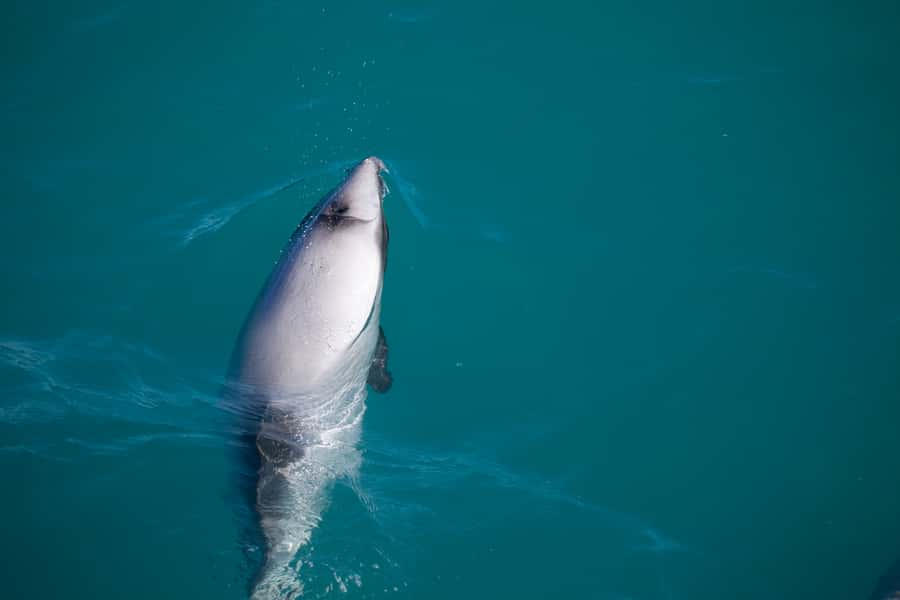
The reserve is home to a range of marine and bird life. You might see New Zealand fur seals resting on rocks or moving through the water, little penguins near the shore, dolphins passing through the bay, and several kinds of seabirds.
Penguins are one of the strongest reasons to choose this trip, but they are wild animals. Sightings vary with season, weather, and luck. Some outings have included penguins on rocks, young birds, or penguins swimming near the kayaks. Other visits have produced seals but only a brief glimpse of a dolphin or no close animal encounters.
That uncertainty is part of the bargain. You should book this for the cliffs, caves, and guided access to the reserve first. Treat a close penguin or dolphin sighting as an extra, not as a promise.
The water-level view gives you a calm way to watch wildlife without a noisy engine. You may see seals sunning themselves on rocks or swimming alongside the route. Guides can point out birds and explain how local species use the coast. The most rewarding moments are often quiet ones, when the kayaks pause and you watch an animal behaving naturally.
You may also learn about the effort to protect little blue penguins and other native species. The provider’s work includes conservation activity around the bay, and visitors have sometimes seen penguin burrows, boxes, or other protection measures. That makes the trip more than a sightseeing circuit. It shows the practical work needed to help vulnerable birds survive.
Same water, a different day out on it:
- Cathedral Cove Kayak Tour
★ 5.0 · 887 reviews - Twilight Glowworm Kayak Tour – Lake Karapiro
★ 5.0 · 493 reviews - Wildlife Sea Kayaking Tour – Kaikoura
★ 5.0 · 467 reviews - Seal Kayaking Adventure in Kaikoura
★ 5.0 · 422 reviews
Guides who add meaning to the trip
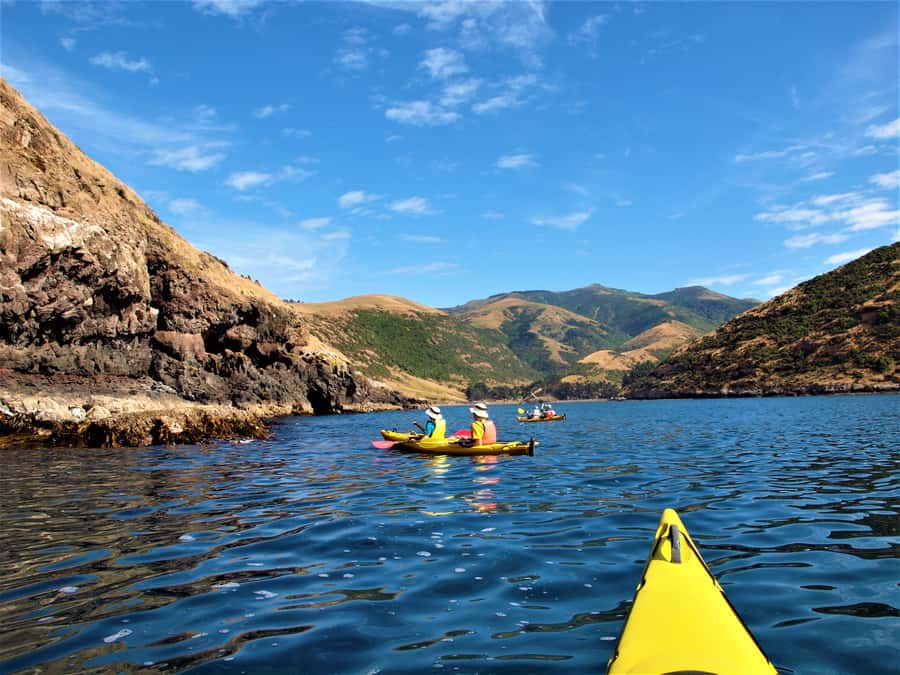
A good guide matters here because the coast can look like a wall of rock if nobody explains what you are seeing. Ben has been singled out for his care with safety and his explanations of plants and wildlife. Kevin has guided visitors through the area’s animals and conservation work, while Vila has been praised for her passion and clear explanations.
Guide assignments can change, so do not book expecting one particular person. Still, the operation’s strongest quality is its personal approach. Guides handle groups with different ages and levels of experience, and they can adapt when conditions change.
Safety guidance is direct. You must listen, follow the paddle instructions, and accept the guide’s decision about the route. One of the clearest signs of a sound operation is the willingness to change plans. On windy days, kayaking has been replaced with a scenic penguin and land-based visit, with communication about the change and a partial refund in at least one reported case.
That is worth keeping in mind before you book. A weather-related change is not necessarily a failed outing. The land route can still provide views, wildlife information, and a look at conservation work. But if kayaking is the only reason you are interested, leave room in your schedule in case the sea does not cooperate.
Morning or afternoon departure?
The early bird morning trip is a good fit if you like starting activities early or want to keep the rest of your day open. The morning option may also appeal to you if you prefer a quieter start, although exact wildlife activity cannot be guaranteed.
The afternoon trip gives you the listed photo stops on the drive. That makes it appealing if you want the road journey to feel like a full sightseeing segment rather than a ride to the launch point.
There is one practical catch. In summer, the afternoon trip can return after local shops and restaurants have closed. Arrange dinner before you leave, especially if you are staying in Akaroa and do not have another food plan.
The full duration is 270 minutes, or about four and a half hours. Add time before departure to reach the meeting point at St Peter’s Church. If you are visiting Akaroa from a cruise ship, allow extra care with timing. The company has accommodated late ship arrivals in the past, but you should contact the provider promptly if your arrival changes.
Who will enjoy this most?
I would choose this for you if you want active sightseeing without committing to a difficult full-day expedition. The paddle is relatively short, the equipment is supplied, and you share a double kayak. It suits first-time kayakers, couples, families with older children, and anyone who wants close access to the coast.
Children must be at least eight years old, and each child must be paired with an adult. Toddlers and infants are not permitted. The guide can decide that a child or adult should not kayak if the conditions, fitness level, or ability are not suitable.
You should have enough mobility to get into and out of a kayak and manage a guided outdoor activity. The tour is not suitable for wheelchair users. If you dislike getting wet, sitting low on the water, or adjusting plans because of wind, choose a land-based activity instead.
This is also a good choice for people who care about conservation. The guides explain the local effort to protect penguins and native habitat, and that work gives the wildlife sightings more meaning. You see not only the animals, but also some of the measures used to help them.
Is $80 good value?
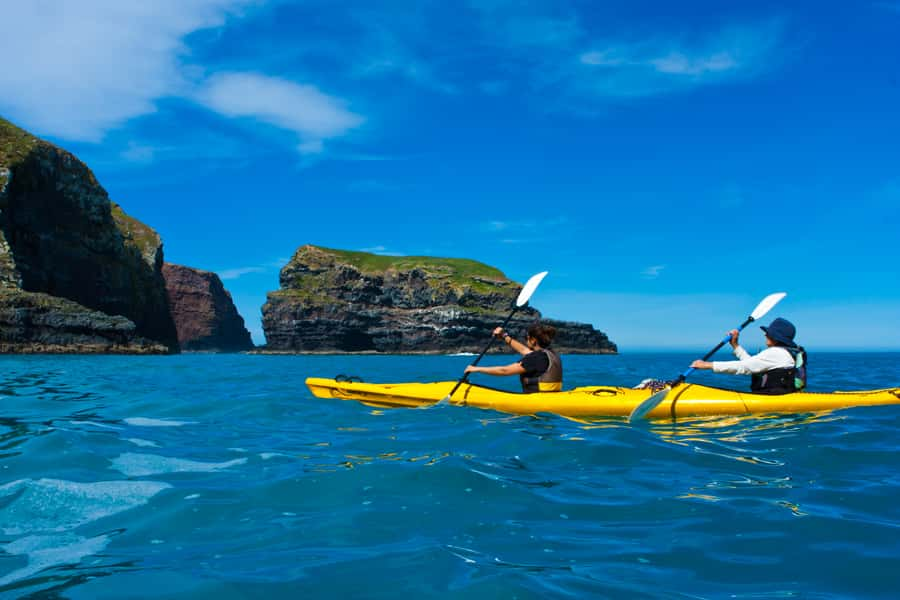
At $80 per person, the outing offers four main services: a scenic 4WD transfer, an English-speaking guide, a guided sea-kayak trip, and all safety and paddling gear. Photo stops are included with the afternoon departure. Food and drink are extra.
I consider that solid value if you want both the journey and the activity. A shorter kayak rental would cost less in some places, but it would not take you over the crater rim, provide commentary, supply protective gear, or guide you along a remote marine reserve.
The value is less certain if you only want guaranteed animal sightings. Wildlife is unpredictable, and some outings have seen many seals and penguins while others have had limited sightings. You are paying for access, scenery, guidance, and the chance to see wildlife in its own setting.
The company also puts clear energy into conservation. That does not guarantee what you will see, but it adds a useful purpose to the visit and helps you understand the pressures facing local penguins and other species.
Free cancellation is available up to 24 hours before departure, with no refund inside that window unless the local partner cancels the activity. The reserve-now, pay-later option can help if your itinerary is still changing.
My recommendation for this Akaroa outing
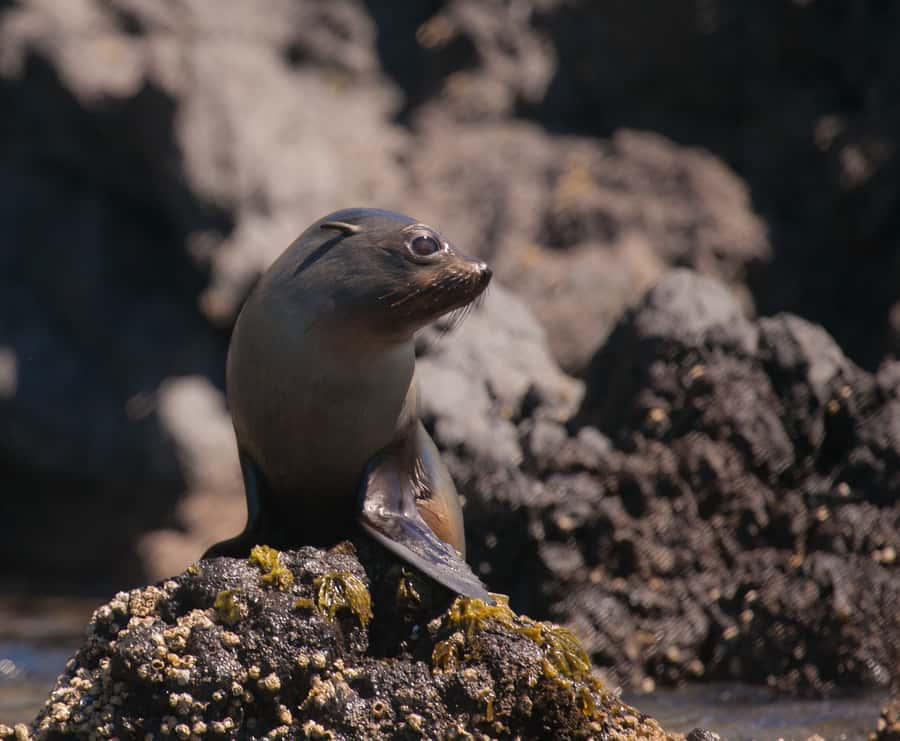
I recommend booking this if you want Akaroa’s wild coast rather than another town walk or standard harbor trip. The 4WD ride gives you access to Flea Bay, the cliffs make the setting memorable, and the kayak provides a quiet way to watch seals, seabirds, penguins, and possibly dolphins.
Book with realistic expectations. The sea may prevent the arch, caves, or even the kayaking, and no guide can promise a penguin beside your boat. If you accept that nature controls the schedule, the combination of scenery, wildlife, safety care, and conservation information makes this one of Akaroa’s better active choices.
FAQ
Where does the Akaroa sea-kayaking tour meet?
The meeting point is before St Peter’s Church in Akaroa.
How long does the full activity last?
The activity lasts 270 minutes, or about four and a half hours.
How long are you on the water?
You will kayak for around 1 to 1.5 hours, depending on sea conditions and the wildlife spotted.
Do I need kayaking experience?
No. Previous kayaking experience is not required, but you must listen to the guide and follow all safety instructions.
What equipment is included?
The tour provides a life jacket, dry jacket, spray deck, dry bags, and the other required kayaking equipment.
What wildlife might I see?
Possible sightings include penguins, New Zealand fur seals, dolphins, and seabirds. Wildlife sightings are not guaranteed.
Are children allowed to join?
Children must be at least eight years old, and each child must be paired with an adult. Toddlers and infants are not permitted.
What happens if the sea is too rough?
The guide decides whether kayaking is safe. The route may be changed, kayaking may be canceled, or a land-based wildlife and scenic option may be offered.
What should I wear and bring?
Bring sunglasses, a hat, water, biodegradable sunscreen, a towel, comfortable weather-appropriate layers, and a change of clothes. Avoid jeans, and wear shorts or leggings that can get wet.
Just added around New Zealand
- Motukorea / Browns Island Sea Kayak Journey★ 5.0 · 35 reviews
- Browns Island Motukorea Sea Kayak Tour★ 5.0 · 9 reviews
- Auckland Bioluminescence Kayak Tour★ 5.0 · 31 reviews
- Auckland City Lights Night Kayaking Tour★ 5.0 · 21 reviews
- Sunrise wildlife sea kayaking in Akaroa marine reserve★ 5.0 · 123 reviews
- Small group guided sea kayaking in Akaroa marine reserve★ 5.0 · 116 reviews
- Guided Electric Mountain Bike & Sea Kayak Tour in Akaroa★ 5.0 · 22 reviews
- Tauranga: Daytime Scenic Lake McLaren Kayak Tour★ 4.6 · 16 reviews
New Zealand Kayak Tours, compared.
Small-Group Kayak Adventure from Franz Josef Glacier
Read our review →
Dart River Canoe and Jet Boat Experience from Queenstown
Read our review →Browse the lists this tour appears in