
Review · GERMANY KAYAK TOURS
Berlin: Guided Tour by Canoe
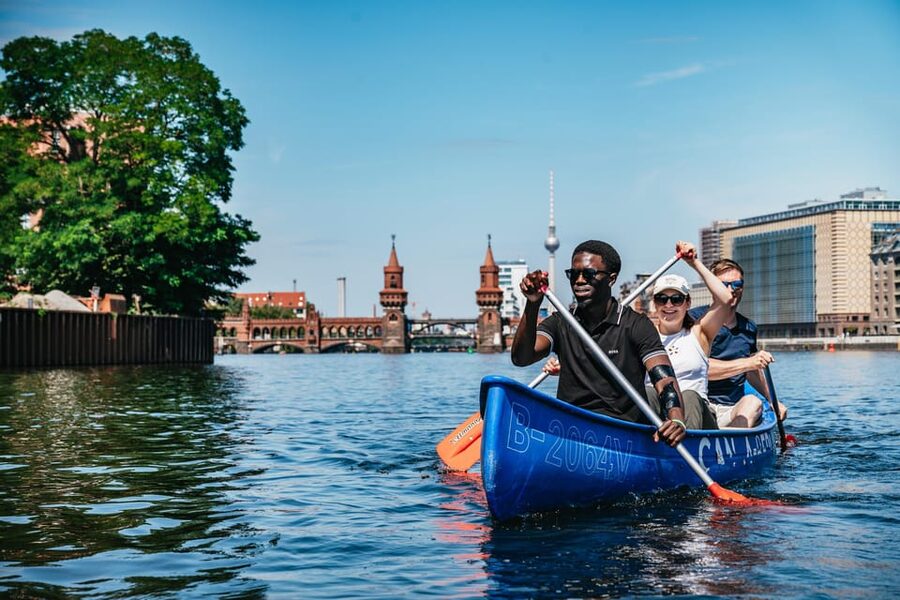
Berlin looks different from a canoe. Instead of crossing the city by train or walking busy streets, you glide through Kreuzberg’s canals, passing old industrial sites, flea-market stalls, houseboats, bridges, and the unmistakable Molecule Man sculptures. It is a sightseeing trip with a paddle in your hands, not a passive boat ride.
I like the direct look at Berlin’s divided past, especially the remains of the old Osthafen border control. I also like the friendly, personal guiding style reported from Florian, Pedro, and Robin, with odd bits of Berlin lore mixed into the route. The main drawback is that the trip can feel shorter than expected, and one participant found the English commentary limited on their outing.
Key points at a glance
- A two-hour canal trip through Kreuzberg: You paddle from Ratiborstraße 14c and return to the same point.
- Berlin’s history from the water: See former border-control remains connected to the city’s East and West division.
- Major sights without a sightseeing bus: The route includes Molecule Man, Oberbaum Bridge, Badeschiff, and the old industrial port area.
- A relaxed, hands-on outing: You use a canoe and paddle, with a swim vest and dry box supplied.
- Guides can shape the experience: Florian, Pedro, and Robin have each been praised for personal stories and warm instruction.
- Plan for the weather: The tour runs rain or shine, so sunny-day preparation matters.
Why a canoe gives Berlin a fresh point of view
Berlin’s canal network can feel separate from the city’s grand museums and famous squares. From the water, you see the back side of Kreuzberg: walls, bridges, converted industrial areas, waterside hangouts, and everyday city life. The pace is slow enough for your guide to point out details you would miss from a road or pavement.
This route follows the Landwehr Canal and begins near Urbanhafen. You are not being taken far out into the countryside. Instead, you remain close to some of Berlin’s most creative and historically charged neighborhoods, where the city’s old divisions and present-day multicultural life sit side by side.
That mix gives the tour its appeal. You get a bit of exercise, a guided history lesson, and a different view of landmarks you may already have seen from land. The canoe also keeps the group close to the water, so you feel more involved than you would on a large sightseeing vessel.
The trip is listed at two hours and costs $44 per person. I consider that fair if you want an active tour with a guide, equipment, and a route through several important parts of eastern and southern Berlin. It is less compelling if your main goal is to cover a long list of central sights quickly.
More Canoe Trips in Germany:
- Stuttgart: Canadian Canoe Rental
★ 4.3 · 107 reviews - Leipzig: 3-Hour City Canoe Tour
★ 4.5 · 65 reviews - Explore Berlin by canoe
★ 4.5 · 36 reviews
Meeting the group at Port Biergarten Jockel
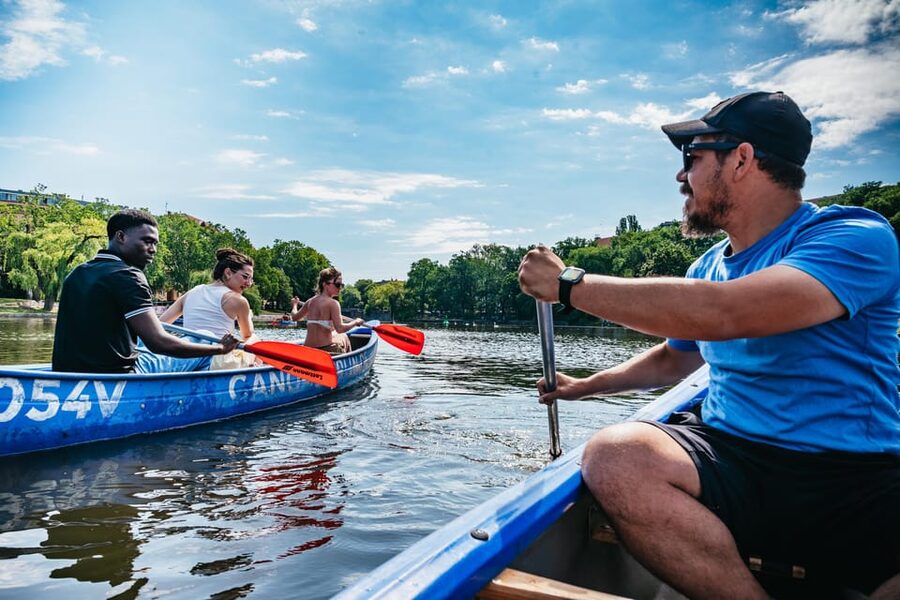
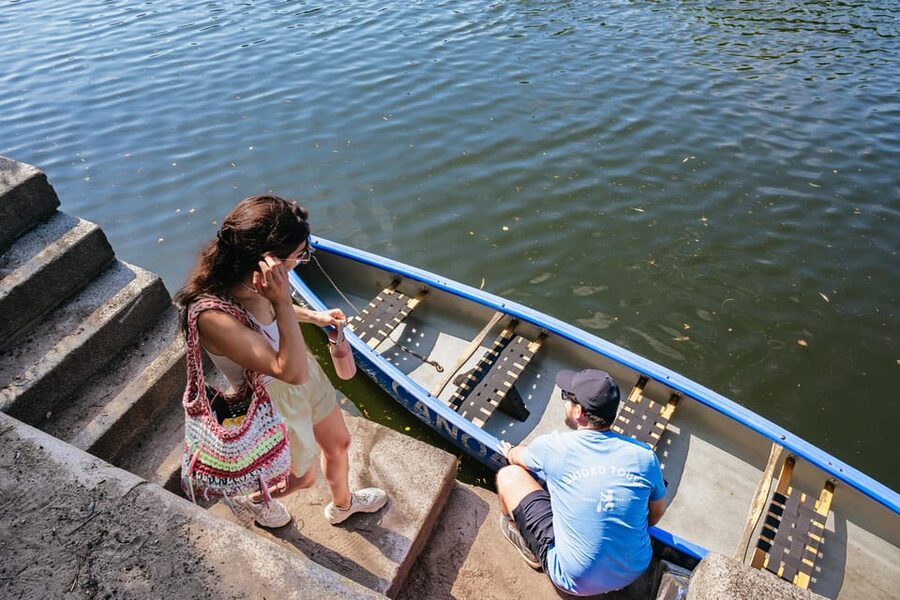
The meeting point is Port Biergarten Jockel at Ratiborstraße 14c. Walk into the beer garden and look for the blue canoes. This detail matters because the voucher location has caused confusion for at least one participant, so give yourself time to find the canoes rather than arriving at the last minute.
The activity ends back at the same location. There is no hotel pickup or drop-off, so you need to make your own way to the port. Since the tour begins and ends in Kreuzberg, it works well as part of a day spent around the canal, Maybachufer, or nearby neighborhoods.
You receive the canoe, paddle, swim vest, and a dry box for valuables. The dry box is useful for a phone, wallet, and keys, but I would still bring only what you need. Water is especially important on a warm, sunny day. One participant specifically wished they had brought more.
The tour runs in rain or shine. That makes clothing a practical concern, not a small footnote. Check the forecast, dress for exposure to the weather, and avoid bringing anything you cannot afford to get damp.
Paddling from Urbanhafen to Admiralbrücke
The opening stretch takes you from the grasslands near Urbanhafen toward historic Admiralbrücke. This is a gentle way to settle into the canoe before the route reaches its more recognizable sights.
If you have not canoed for years, do not assume you need expert skills. One person who had not been in a canoe for a long time found the trip comfortable, helped by calm water and regular attention from the guide. Conditions can vary, but the format is suited to beginners who are willing to paddle and listen to basic instructions.
Admiralbrücke is more than a crossing point. It is part of Kreuzberg’s local character, and seeing it from below gives you a different sense of the neighborhood. The canal acts like a moving street, with each bridge marking a change in the view.
Your guide adds context along the way. The best part of this format is that the commentary can respond to what is around you. Instead of hearing a fixed recording, you might get an anecdote about a bridge, a neighborhood custom, or a less polished side of central Berlin.
The guide names Florian, Pedro, and Robin have all been associated with particularly warm and lively outings. You should not assume a specific guide will lead your departure, but the feedback suggests that the guide can make a noticeable difference. Florian has been praised for frequent check-ins and unusual Berlin stories, while Pedro has been described as playful and attentive.
Maybachufer and the flea-market shoreline
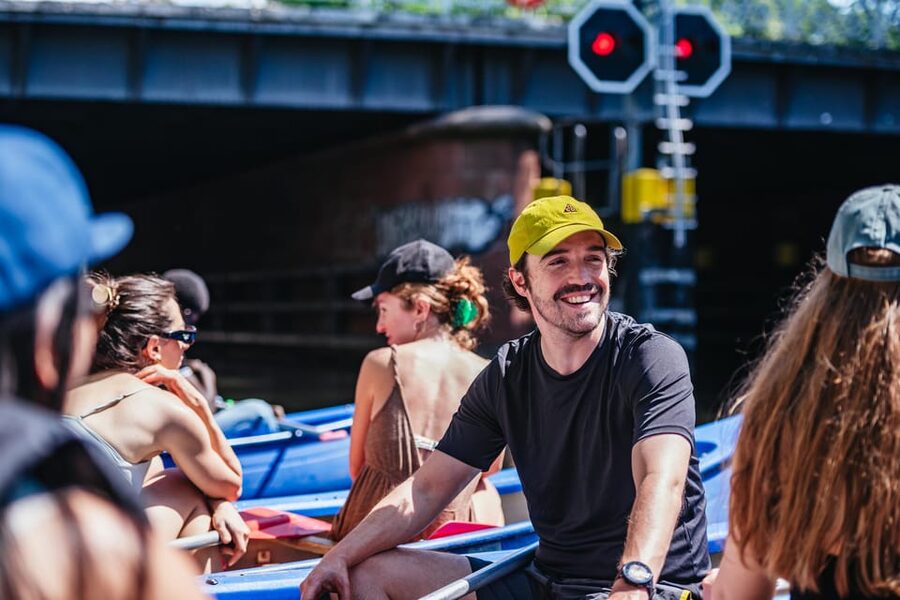
As you continue, the canoe passes Maybachufer, known for its waterside flea-market atmosphere. From the canal, you see the market area from a less familiar angle. The point is not simply to tick off a market from a sightseeing list. It is to watch how the canal fits into ordinary neighborhood life.
This section helps explain Kreuzberg’s open-minded and multicultural character. You are moving through a part of Berlin that has long been associated with different communities, alternative lifestyles, and a lively street culture. The guide’s stories give you a way to connect those visible details with the city’s past.
The canal is also a useful reminder that Berlin’s identity is not confined to grand monuments. Here, the view may include a bridge, a market, a waterside building, or an improvised-looking boat before a major landmark appears. That variety keeps the trip from feeling like a standard parade of postcard views.
Do not expect a long stop at every point. The listed route includes photo and guided-tour time at Länderdreieck, with about 10 minutes noted there, but much of the activity is spent paddling. If you want extensive time for photographs, keep your camera ready and use the dry box between stops.
A few more paddling days around Germany worth a look
- Nerja: Guided Kayak Tour Nerja Cliffs and Maro Waterfall
★ 4.7 · 2,916 reviews - Dubrovnik: Sea Kayaking&Snorkelling Guided Day/Sunset Tours
★ 4.9 · 2,869 reviews - Benagil: Caves, Beaches, and Secret Spots Guided Kayak Tour
★ 4.8 · 2,675 reviews - Rock Springs 2-Hour Glass Bottom Guided Kayak Eco Tour
★ 5.0 · 2,459 reviews
Länderdreieck and the old industrial port
Länderdreieck is one of the route’s designated stops for a short break, photographs, sightseeing, and more commentary. The name refers to a meeting point of three districts, making it a useful place for your guide to explain how Berlin’s neighborhoods fit together.
The tour also reaches the old Osthafen area. This is where the route gains its strongest historical edge. You can see remains of old border-control facilities from the period when Berlin was divided into East and West.
That physical evidence is valuable because the division of Berlin can otherwise feel abstract. Museums and memorials explain the political story, but a waterside checkpoint or port structure shows how control affected everyday movement and trade. The canal route gives you time to look at those remains without rushing past in a vehicle.
The area also reflects Berlin’s change over time. Industrial spaces connected to the divided city now sit near creative projects, public gathering places, and leisure spots. The contrast is one of the most interesting parts of the tour: you see a city that has not erased its past, but has put old structures into a new setting.
Molecule Man, Oberbaum Bridge, and Badeschiff
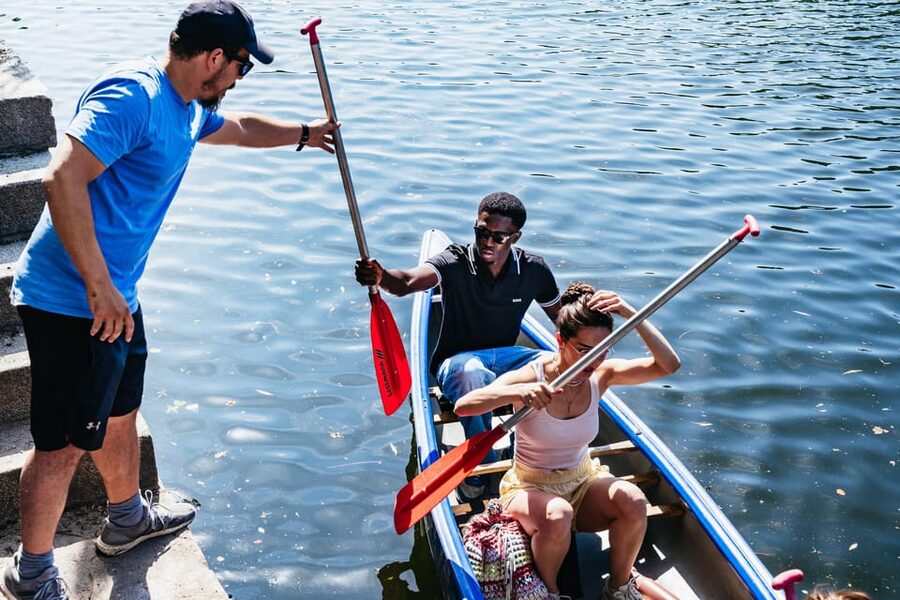
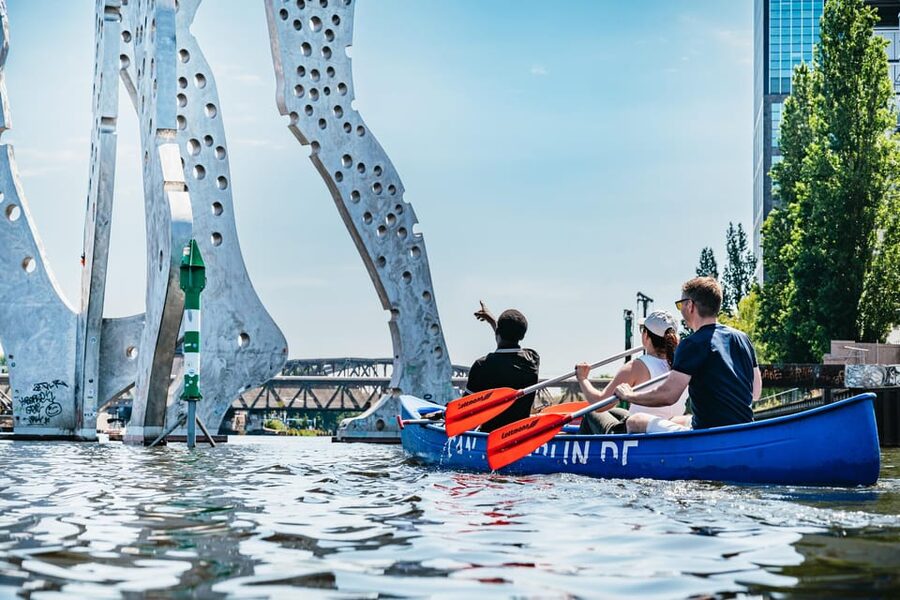
The route’s best-known visual moments arrive around Molecule Man and Oberbaum Bridge. The three large aluminum figures of Molecule Man rise from the water, their bodies made from repeated outlines that seem to meet above the river. They are easy to recognize from land, but the water gives you a clear sense of how the sculpture relates to Berlin’s waterways and skyline.
This is a natural photo stop, though the canoe keeps moving and conditions may not allow a long pause. Keep your phone protected and listen to the guide’s instructions before reaching for it.
Oberbaum Bridge is another highlight. Its brick towers and pointed details give it a very different look from the industrial structures farther along the route. The bridge also carries strong symbolic weight as a former crossing between East and West Berlin. Seeing it after the old port facilities helps you connect the city’s divided past with its present-day public spaces.
Nearby, Badeschiff offers a lighter, more contemporary sight. The floating swimming pool and beach-bar setting show how Berlin uses the river and canal areas for leisure. It is a useful counterpoint to the border remains and old industrial port. The route moves from control and division to recreation and public life without needing a formal museum visit.
Some departures have also included passing through locks and continuing all the way to Molecule Man and Oberbaumbrücke. The exact feel of the route can depend on water conditions, timing, and the group, so treat the listed sights as the main plan rather than a promise of lengthy stops at each one.
What the guide adds to two hours on the water
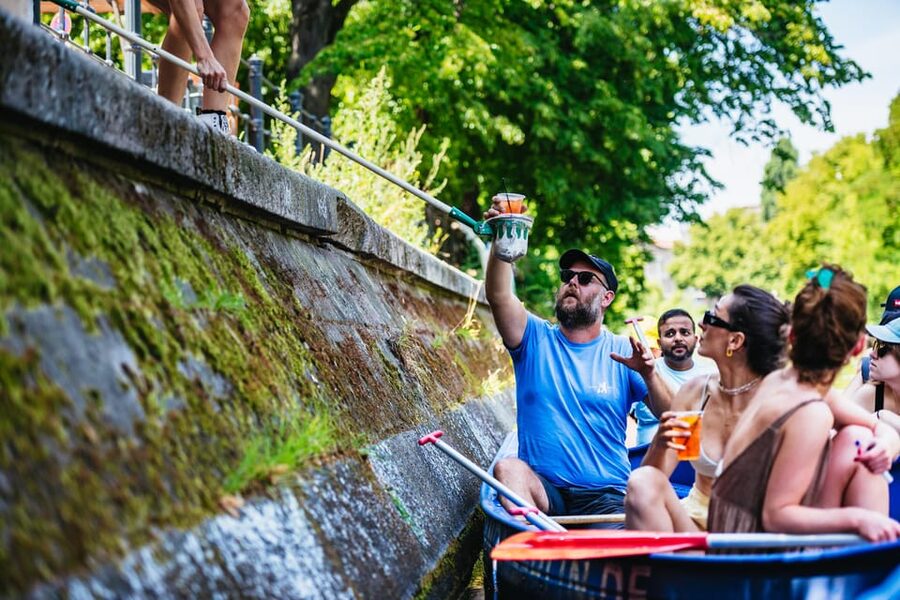
A canoe tour can be quiet and scenic, but without good commentary it may become little more than a workout. Here, the guide is central to the experience. You get explanations of the canal, the neighborhoods, the old border points, and Berlin’s changing character as you paddle.
The strongest guiding style seems to combine facts with personal stories. Florian has been praised for sharing unusual Berlin anecdotes and checking that participants were comfortable. Pedro has been appreciated for a playful manner and a personal view of the city. Robin has also been singled out for making the trip feel informative and good value.
Language deserves a clear note. The tour is offered in English and German, but one participant found that the English explanation was limited and sometimes depended on translation. That may have been specific to one outing, but if detailed English commentary is essential to your decision, you may want to confirm the language arrangements before booking.
The group can sometimes be small. One departure had only one booking, which effectively created a private-style experience, while another participant found more people than expected on a special operating day. Do not count on a private tour, but a small group can make it easier to ask questions and get individual help.
Is $44 a fair price?
At $44, this is not the cheapest way to see Berlin. You can walk beside the canal for little or no cost, and public transport will take you near many of the same areas. The price makes more sense when you value the canoe, guide, safety equipment, and the chance to see the sights from the water.
You are also paying for interpretation. The tour connects Molecule Man, Oberbaum Bridge, Badeschiff, Maybachufer, and the old border-control area into one story. That is more useful than simply renting a boat and guessing what you are looking at.
The value drops if your outing runs noticeably shorter than expected or if the commentary is not available in the language you selected. A two-hour activity should leave enough time for paddling and explanation, so keep your expectations realistic and check the starting time and language before you commit.
Free cancellation up to 24 hours before the activity and the option to reserve now and pay later add flexibility. Those policies are useful in Berlin, where rain can change the appeal of an outdoor activity quickly, although the tour itself operates in all weather.
Who will enjoy this canoe tour?
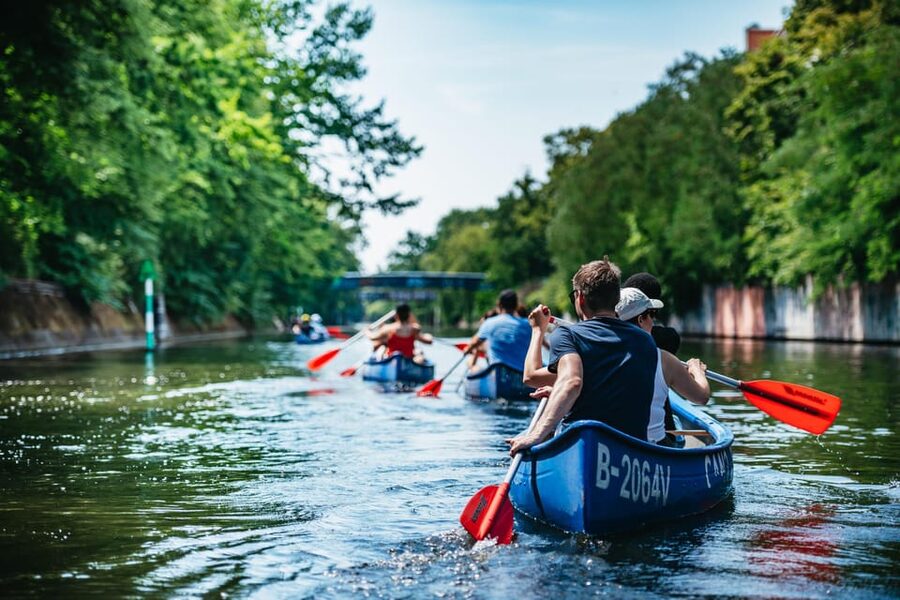
I would recommend it to people who want to see Berlin actively rather than from a coach or a large sightseeing boat. It suits couples, friends, and independent visitors who enjoy local stories, urban scenery, and a little physical participation.
It is also a good choice for someone who has already seen the Brandenburg Gate, Museum Island, or the main memorials and wants another side of the city. The route focuses on Kreuzberg and the eastern canal areas, so it adds something different to a first visit.
You should think twice if you dislike getting wet, find paddling uncomfortable, or need a tightly timed sightseeing schedule. The tour runs rain or shine, the exact length may feel shorter to some participants, and the route is shaped by the water rather than by a checklist of central landmarks.
Bring water on hot days, keep valuables compact, and wear clothing suited to the forecast. Most importantly, arrive at Port Biergarten Jockel with enough time to find the blue canoes.
Should you book the Berlin canoe tour?
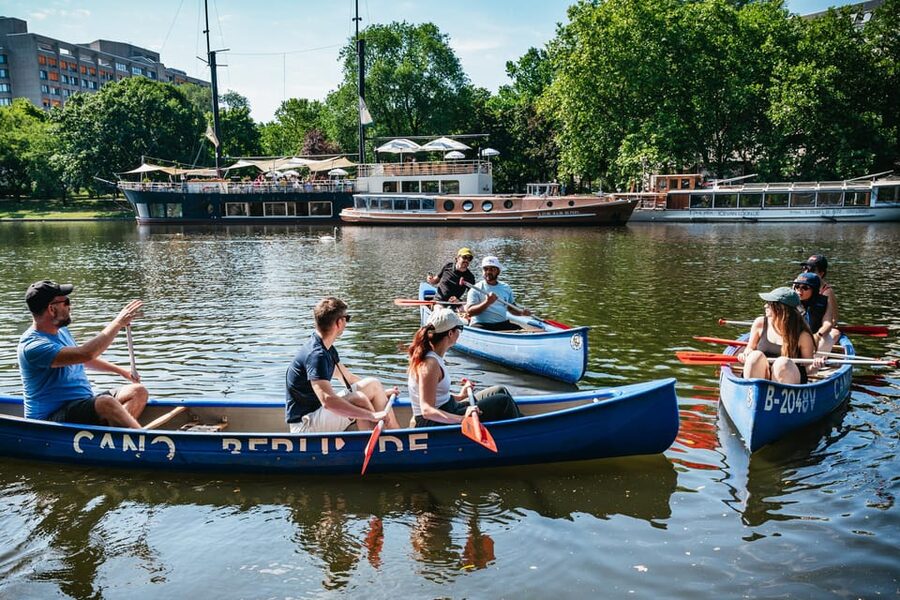
Book it if you want a close-up view of Kreuzberg, a useful explanation of Berlin’s divided past, and a relaxed way to reach Molecule Man and Oberbaum Bridge. The old Osthafen border remains give the trip more substance than a simple paddle, while the guides can add the local color that makes the route memorable.
Skip it if you want guaranteed long stops, perfectly consistent English commentary, or a full two hours of nonstop sightseeing. For most visitors who like water, history, and a bit of activity, $44 is a reasonable price for a distinctive Berlin outing. Just prepare for the weather and confirm the language details before you book.
FAQ
How long is the Berlin canoe tour?
The activity lasts two hours. Starting times vary, so check availability when booking.
Where does the tour begin?
Meet at Port Biergarten Jockel at Ratiborstraße 14c. Walk into the beer garden and look for the blue canoes.
Does the canoe tour return to the starting point?
Yes. The activity ends back at the meeting point on Ratiborstraße.
Which languages are available?
The tour is offered in English and German.
What equipment is included?
The tour includes a canoe, paddle, swim vest, dry box for valuables, and guide.
Does the tour operate in bad weather?
Yes. The tour takes place rain or shine.
Just added around Germany
- Explore Berlin by canoe★ 4.5 · 36 reviews
- Canoe tour in the Allgäu★ 5.0 · 9 reviews
- Stuttgart: Canadian Canoe Rental★ 4.3 · 107 reviews
- Stuttgart: Stand Up Paddling Rental★ 4.6 · 55 reviews
- Stand Up Paddling at lake Chiemsee★ 4.5 · 5 reviews
- Prerow: Standup paddle sunset tour with picnic★ 4.7 · 6 reviews
- Lübeck’s old town by canoe: explore and circumnavigate on your own★ 4.8 · 24 reviews
- Leipzig: Cospudener Lake Stand-Up Paddleboard Course★ 4.7 · 32 reviews
Germany Kayak Tours, compared.
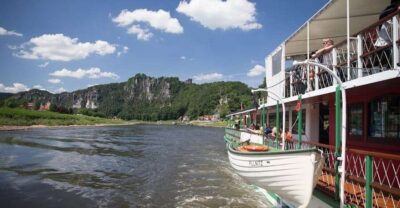
Dresden: Königstein Fortress Paddle Steamer Cruise
Read our review →
Dresden: Sunset Paddle Steamer Tour on the Elbe River
Read our review →
Dresden: Paddle Steamer Winter Cruise to Pillnitz
Read our review →
Browse the lists this tour appears in