
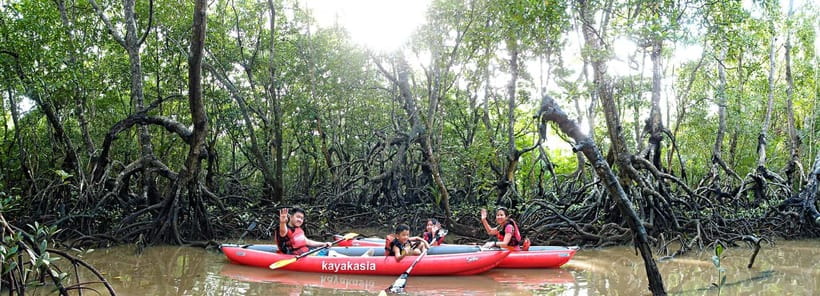
Review · MANGROVE KAYAKING
From Tagbilaran City/Panglao Island: Bohol Mangrove Kayaking
The best part of this Bohol outing is simple: you steer your own kayak through narrow mangrove passages where engines and crowds have no place. The Abatan River feels quiet and alive, with flooded forest, winding channels, birdlife, and local guides who explain what you are seeing without turning the trip into a lecture.
I like the small-group approach and the strong link to conservation. I also like the human touch: guides such as Vince and Jeremy take photos, answer questions, and let you set a comfortable pace. The main consideration is the paddling itself. You will be on the water for up to two hours, and the drive can take about an hour from Panglao.
Key points to know before you book
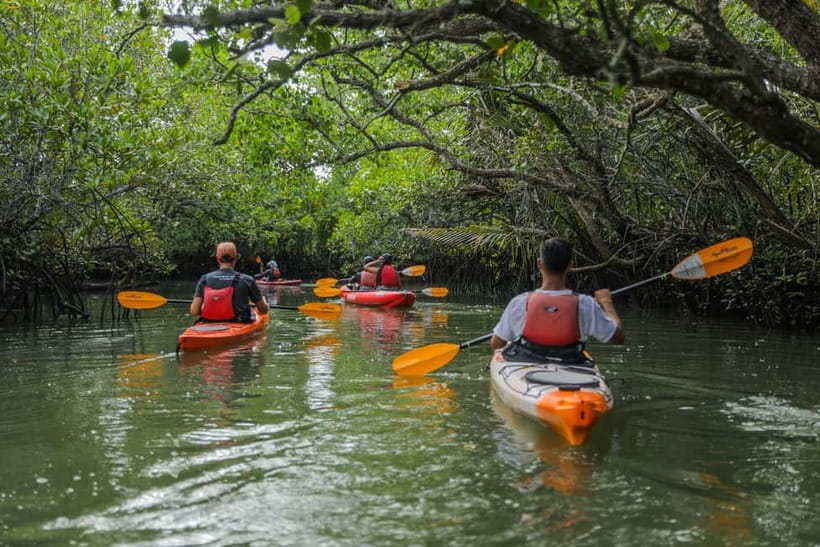
- The route uses real mangrove tunnels: You paddle through narrow corridors and then return to broader parts of the Abatan River.
- Local guides lead the way: Vince and Jeremy are among the guides praised for clear explanations, patience, and easy conversation.
- It is a hands-on trip: You are not sitting in a boat while someone else does the work. A basic lesson and safety briefing come first.
- The setting has a conservation purpose: The area includes 32 mangrove species, including the endangered Camptostemon philippinense.
- The package is well supplied: Transport, kayak equipment, water refills, lockers, changing rooms, food, and drinks are included.
- Allow a full half day: The total experience lasts five hours, with travel time, paddling, and food afterward.
Entering Bohol’s quiet Abatan River
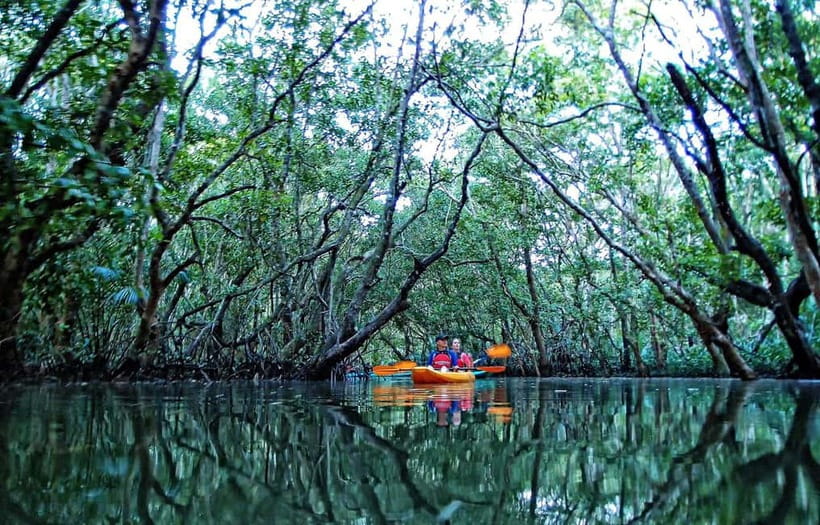
Bohol is often sold through its famous sights: the Chocolate Hills, tarsiers, beaches, and busy sightseeing circuits. This kayaking trip gives you a different view of the island, one shaped by tidal water, mangrove roots, mudflats, and river communities.
The Abatan River is not treated like a stage set. You paddle through a working natural area, and the feeling is closer to a field outing than a standard attraction. There is no motor noise during the kayak portion, no passenger seat, and no guide shouting over an engine.
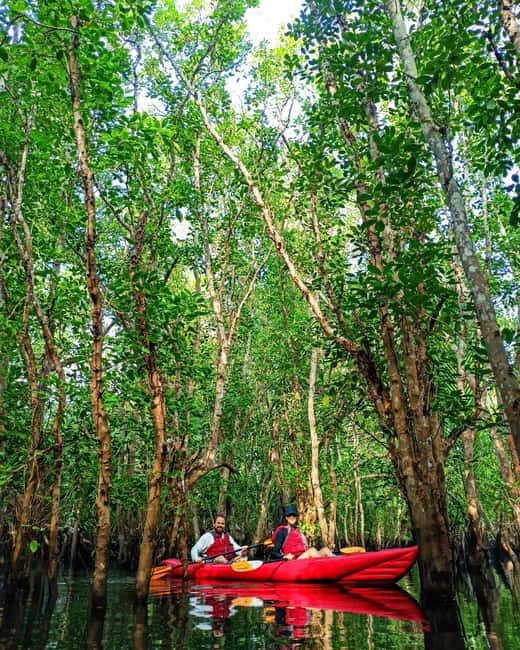
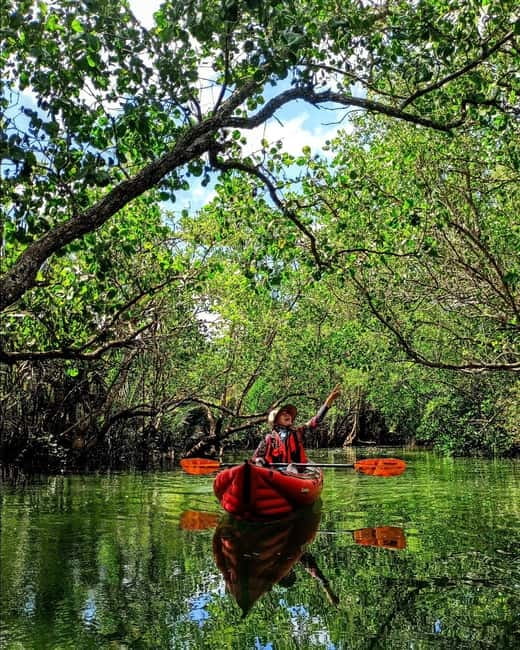
The route includes narrow mangrove tunnels where branches and roots create shifting green corridors. Some passages lead into less exposed parts of the forest. Others open back onto the main river, where your guide can talk about local culture, the river community, and the role these trees play in daily life.
That changing rhythm is one reason the trip works so well. You move from enclosed, shaded water to wider river views, then back into the forest. The scenery is not dramatic in the beach postcard sense, but it rewards attention. Look at the roots, mud, leaves, and waterline rather than waiting for one big photo stop.
More Mangrove Kayak Tours in the world:
- Sarasota Guided Mangrove Tunnel Kayak Tour
★ 5.0 · 2,440 reviews - Key West Mangrove Kayak Eco Tour
★ 5.0 · 2,205 reviews - Krabi: Kayak Adventure through Ao Thalane Mangrove Forest
★ 4.6 · 2,024 reviews
The drive from Panglao or Tagbilaran
Round-trip transport is included from resorts in Panglao Island or Tagbilaran City. Pickup details depend on your base, so allow room in your morning schedule rather than treating the five-hour duration as five hours of paddling.
From Tagbilaran City, the drive to the river station is about 15 minutes. From Panglao, it can take about an hour. The supplied timing also refers to a roughly 30-minute van transfer, so the exact road time may vary with your pickup point and route.
That difference matters. If you stay in Panglao, the outing becomes a proper half-day commitment once the road transfer, preparation, paddling, and meal are counted. I see the included van as a real benefit, since you do not need to arrange a separate driver or worry about finding the river station.
The drive also helps put the river experience in context. You are leaving the island’s best-known resort zone for a quieter waterway and a community-run conservation area. That change of pace is part of the value.
A safety lesson before you paddle
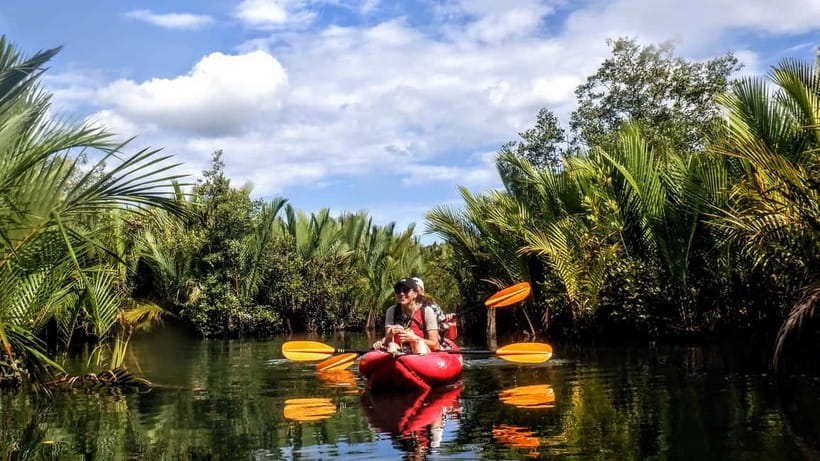
At the river station, you receive kayak equipment, a basic lesson, and safety instructions before setting off. This is important even if you have paddled before, since each river has its own current, bends, and practical limits.
The experience is intended for beginners, but beginner-friendly does not mean effortless. You will need to sit in a kayak, use a paddle, follow directions, and manage several hours of activity around the transfer and preparation period.
The maximum water time is two hours. That keeps the outing from becoming an endurance test, but you should still wear comfortable clothing and be ready for sun, humidity, and possible splashes.
You can use the lockers, washroom, and changing rooms. Bring swimwear or clothes that can handle water, along with sunscreen, insect repellent, a camera, and drinking water. Water refills are included, so a refillable bottle makes sense.
The activity is not suitable for children under six, people with mobility impairments, or non-swimmers. That last point is worth noting even though the kayaking is aimed at beginners. You do not need advanced kayaking skills, but you should be comfortable around water.
Through the mangrove tunnels
Once the lesson is finished, you paddle into the mangrove forest with a professional kayak guide. The guide leads from the water and points out plants, birdlife, crab holes, and signs of the river’s changing condition.
You may hear about the 32 mangrove species found in the area. One of them, Camptostemon philippinense, is endangered. The trees are not just scenic decoration. They help reduce coastal erosion, provide nursery areas for fish, and store carbon.
That explanation gives the route more weight. A root system that looks tangled from a kayak is also a natural barrier and shelter. A muddy bank with small holes is part of a larger food chain. You begin to see the forest as working infrastructure, not empty space between tourist stops.
Birdwatching is part of the appeal, though this is not presented as a specialist birding trip. Your guide may point out birds overhead or near the water, and the quiet helps you notice them. Keep your camera ready, but do not expect every animal to pose.
The route has been described as about seven kilometers by one guide’s account. The exact distance may vary, but that gives you a sense of the scale. You cover enough water to feel that you have explored the river, without spending the entire day on the paddle.
More Island Kayak Tours in the world:
- Phang Nga Bay Sea Cave Canoeing & James Bond Island by Big Boat
★ 5.0 · 4,666 reviews - Halong Bay Day Tour With Titop Island, Cave, Kayak & Lunch
★ 5.0 · 2,551 reviews - Phuket: James Bond Island Longtail Boat and Sea Canoe Tour
★ 4.8 · 2,364 reviews - Magnetic Island Discovery Tour with Snorkeling & Paddle Boarding
★ 5.0 · 1,372 reviews
Why the quiet matters
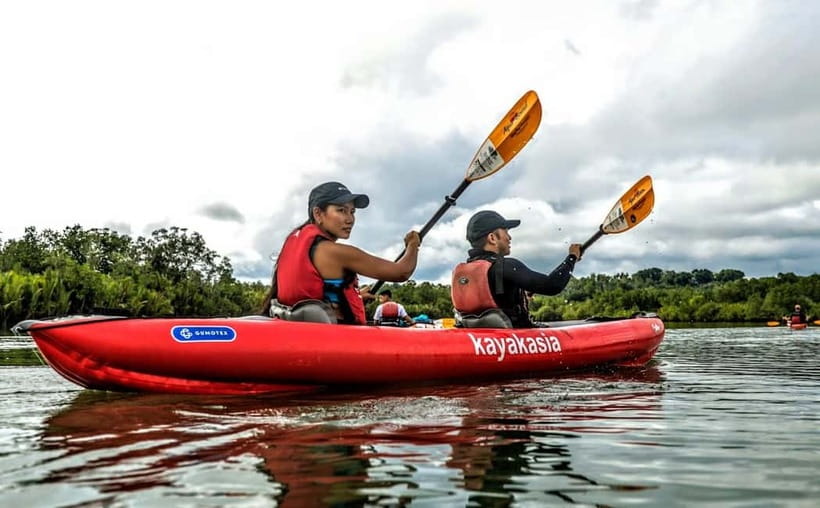
The strongest feature here is not a single landmark. It is the absence of noise and pressure.
With small groups and limited slots, the river can feel unhurried. You have time to listen, paddle, stop, and ask questions. The guide can explain what you are seeing instead of rushing everyone through a fixed sequence.
That makes a difference in a mangrove forest. The details are close at hand, and the narrow passages can feel awkward if you are rushed. A slower pace lets you steer carefully and enjoy the odd shapes of roots and branches.
There is still some physical work. Paddling through turns requires coordination, and conditions on the river can affect how hard you work. The two-hour water limit keeps the session manageable, but I would not choose this activity if you want a completely passive morning.
The quiet also makes this a useful counterpoint to Bohol’s busier attractions. If you have already spent time around beaches, shops, or major sightseeing roads, the river gives you a calmer side of the island.
Guides who make the route clearer
The guide is central to the experience. The local paddlers are trained and certified, and they live close enough to understand the river beyond a memorized script.
Vince is noted for giving clear environmental information, taking many photos, and never making the trip feel rushed. Jeremy is praised for his strong background in the local environment and for explaining the area naturally during the route.
You may not have either guide on your particular departure, but those details point to the kind of service to expect: local, conversational, and focused on the river. The guides also help with the small practical moments, such as steering through tight sections and knowing when to stop.
Ask questions as you go. You can learn about the plants, crab holes, birds, local community, and the effect of typhoons on the area. The mangroves have helped the river corridor recover from storm damage, and that conservation story is more useful when connected to a person who knows the place.
The language options are English and Tagalog. That makes the trip accessible to English-speaking visitors while keeping it tied to the local community.
Food, changing rooms, and the end of the outing
After the water portion, you receive local snacks, food, and drinks. The meal is not an afterthought. It gives you time to cool down, talk with the guide, and settle back into dry clothes.
The food has received especially strong praise, with portions described as generous and the meal as delicious. Exact dishes are not specified, so do not book this expecting a particular menu. Instead, treat the included food as a useful part of the package after paddling.
Changing rooms and washroom access are included, which matters after a warm, wet activity. You can finish the river section without worrying about spending the rest of the day in damp clothes.
Water refills are also included. That is a small detail, but it fits the conservation focus and means you do not need to rely only on disposable bottles.
What the $64 price really covers
At $64 per person, this is not the cheapest way to spend a morning in Bohol. It is also more than a simple kayak rental because the fee covers several separate needs.
You receive round-trip transport, kayak gear, instruction, a professional guide, river and community fees, food and drinks, water refills, lockers, washrooms, and changing rooms. That removes the usual small add-on costs and reduces the planning work.
The value is strongest if you are staying in Panglao and would otherwise need to arrange a driver. It is also strong if you care about a small-group experience and conservation rather than simply renting a kayak for a short paddle.
If you only want to sit near the water and take photos, the price may not suit you. This is an active experience, and its value comes from the setting, the guide, and the chance to support a protected river corridor.
The fee includes river usage and community fees, so your visit contributes directly to keeping the area useful to local residents and worth protecting. That does not make the price automatically right for every budget, but it gives the cost a clearer purpose.
Who should book this kayaking trip
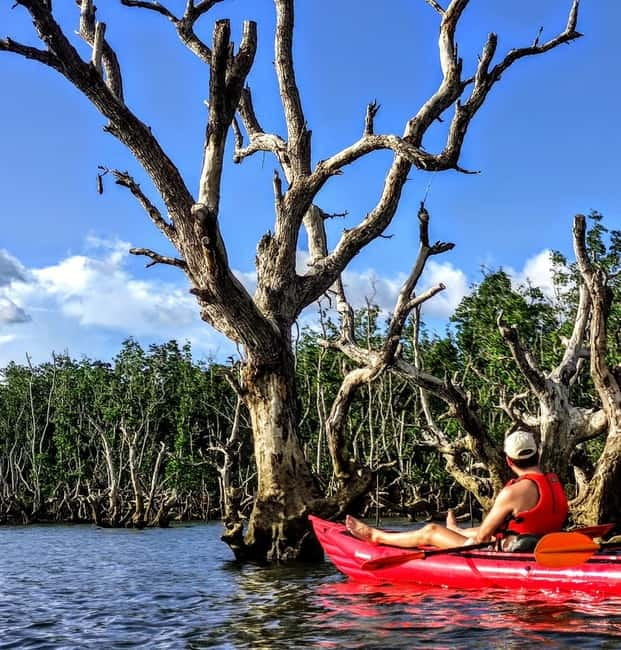
I would choose this for someone who wants a quieter, more unusual side of Bohol. It suits couples, solo visitors, friends, and families with children aged six or older who can manage the physical demands and are comfortable on water.
It is especially good for you if:
- You prefer nature and local guidance to a crowded sightseeing stop.
- You want to take part rather than sit in a motorized boat.
- You are interested in mangroves, birds, river life, and conservation.
- You value hotel pickup and an organized half-day plan.
- You want food and changing facilities included.
- You have enough time for a five-hour outing, plus the drive.
I would think twice if you are a non-swimmer, have mobility limitations, dislike heat and insects, or want a completely dry activity. The route is suitable for beginners, but it still calls for paddling and basic comfort around water.
Bring a camera, but protect it from splashes. Wear clothes that dry easily, apply sunscreen before leaving, and use insect repellent. Comfortable clothing matters more than dressing for a polished sightseeing photo.
Book this if you want real river time
Book this Abatan River trip if you want to paddle through a living mangrove forest, hear local explanations, and spend a half day away from Bohol’s standard sightseeing circuit. The quiet setting, small groups, useful facilities, and included meal make the price easier to justify.
The main tradeoff is time and effort. Panglao pickups can involve about an hour on the road, and the paddle requires active participation. If that sounds like part of the fun, this is one of the more personal ways to see Bohol.
If you are choosing between a quick photo stop and a slower, hands-on look at the island’s waterways, I would choose the kayak. You leave with more than pictures: you get a clearer sense of why mangroves matter and how local people help protect them.
FAQ
How long does the Bohol mangrove kayaking experience last?
The full activity lasts five hours. The maximum time on the water is two hours, with transport, preparation, food, and other time at the river station included.
Where does pickup take place?
Round-trip transport is provided from resorts in Panglao Island or Tagbilaran City. The pickup location is arranged within the Bohol service area.
How long is the drive to the river?
The drive is about 15 minutes from Tagbilaran City and can take about an hour from Panglao or Loboc. Exact timing depends on the pickup point.
Is kayaking experience required?
No. The activity is suitable for beginners, and a basic kayaking lesson and safety briefing are provided before you start.
What languages does the guide speak?
Guides lead the experience in English or Tagalog.
What should I bring?
Bring swimwear, comfortable clothes, sunscreen, water, insect repellent, and a camera. Water refills are available during the activity.
Is the trip suitable for children?
Children under six cannot join. The activity is also not suitable for people with mobility impairments or non-swimmers.
What is included in the price?
The price includes two-way transport, kayak equipment, instruction, a professional guide, river and community fees, food and drinks, water refills, lockers, washrooms, and changing rooms.
Just added around the world
- Night Mangrove Kayak Tour★ 5.0 · 9 reviews
- Paddle Boarding Lesson in Bonaire (SUP)★ 5.0 · 7 reviews
- 2 Hour Mangrove Kayak and Snorkel Tour★ 5.0 · 42 reviews
- Canoeing on the Elbe river from Děčín to Bad Schandau★ 3.5 · 5 reviews
- 1 Hour Mangrove Kayak Tour★ 5.0 · 7 reviews
- Canoeing on the Elbe river + Bike rental from Děčín to Bad Schandau★ 4.5 · 21 reviews
- Guided Clear Kayak Tour in Bled★ 5.0 · 53 reviews
- From Bled: Black Hole Kayaking★ 5.0 · 76 reviews
Mangrove Kayaking, compared.
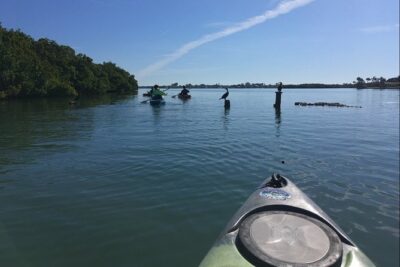
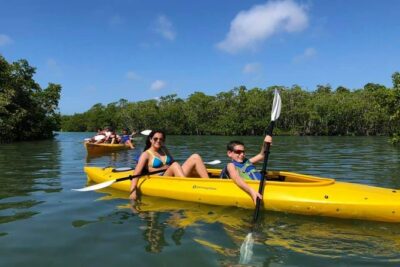
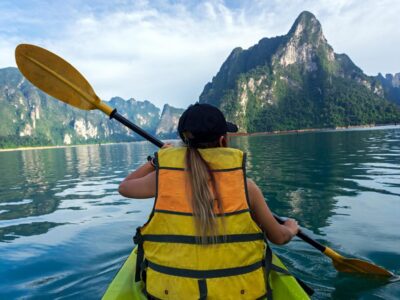
Kayak Adventure through Ao Thalane Mangrove Forest
Read our review →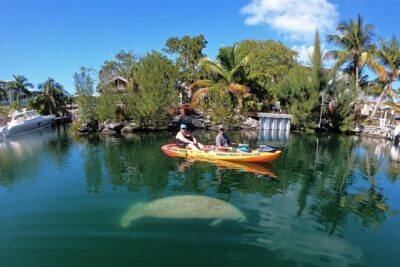
Mangroves and Manatees – Guided Kayak Eco Tour
Read our review →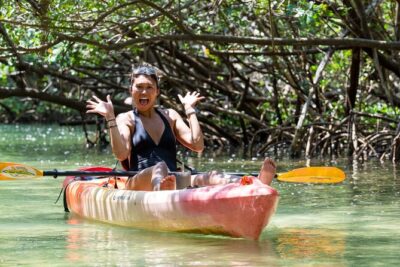
Sarasota Mangrove Tunnel Guided Kayak Adventure
Read our review →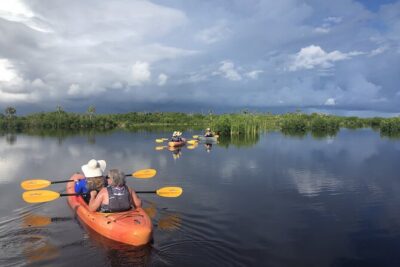
Manatees and Mangrove Tunnels Small Group Kayak Tour
Read our review →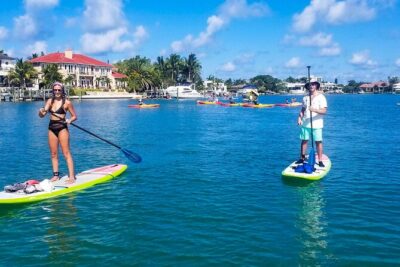
Mangroves, Manatees, and a Hidden Beach: Kayak Tour
Read our review →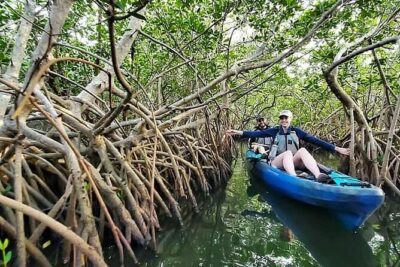
Thousand Island Mangrove Tunnel, Manatee & Dolphin Kayak Tour w/Cocoa Kayaking
Read our review →Browse the lists this tour appears in