
Review · LAOS KAYAK TOURS
Nong Khiaw: 2-Day Trekking,Hmong village,Home Stay&Kayaking
The best part of this Nong Khiaw trip is the change of pace. You leave town by tuk-tuk and spend two days moving through forest paths, small villages, riverbank communities, and the quiet bends of the Nam Ou. This is not a quick photo stop tour. You eat, sleep, and work alongside local people for part of the trip.
I like the village homestay and the chance to make bamboo handicrafts with local help. I also like the neat finish: a swim at Tad Mork Waterfall followed by a gentle kayak ride with birds, water buffalo, and fishermen along the river. The main caution is simple: the trek can be moderate to challenging, and one French-speaking guest found the English explanations hard to understand.
Key points at a glance
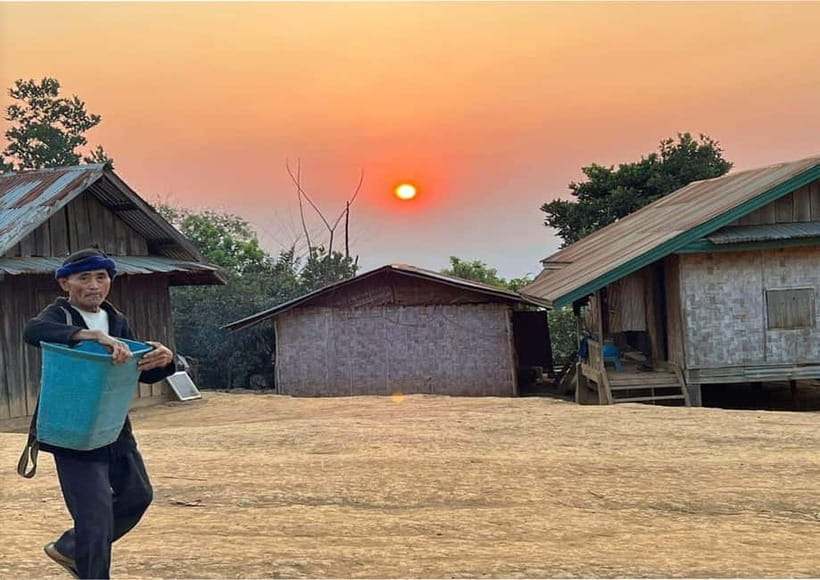
- Village life, not staged entertainment: Visit Lao, Khmu, and Hmong communities where daily routines continue without sales pitches.
- Bamboo craft workshop: Work with a local villager and learn a practical traditional skill.
- A real overnight stay: Cook dinner, eat with villagers, and sleep in a village rather than returning to Nong Khiaw.
- Waterfall and river pairing: Swim at Tad Mork, then kayak downstream on the Nam Ou.
- Strong guide reports: Bick, also spelled Bic, is repeatedly singled out for his warmth and teaching.
- A demanding two-day route: Good shoes, water, insect repellent, and a reasonable level of fitness matter.
Why this two-day route feels different
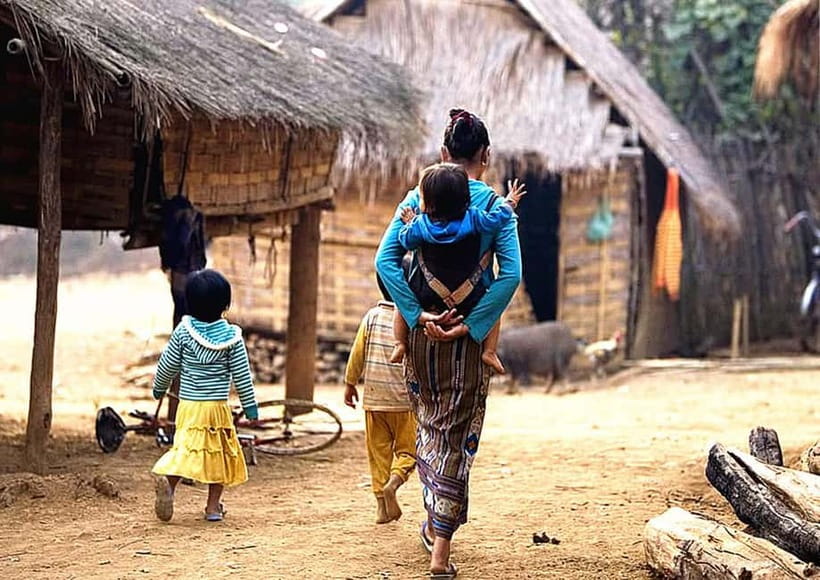
Nong Khiaw is famous for its river and dramatic hills, but this trip takes you beyond the usual town viewpoint. The route links remote villages with forest walking and river travel, so you see several sides of northern Laos in one compact outing.
You start with a tuk-tuk ride from Nong Khiaw to the first village area. From there, the trip becomes more personal and slower. You walk between settlements, stop for meals, learn about village life, and spend the night away from the main tourist base.
I like this format because the overnight stay gives the journey some shape. A day trip can show you a village. Sleeping there gives you time to notice the quieter details: how food is prepared, how bamboo is used, and how the village feels after the walking group has stopped moving.
The experience is priced at $80 per person. That includes a guide, transport by tuk-tuk at the start, lunch, dinner, breakfast, overnight accommodation, village visits, the craft session, waterfall swimming, and kayaking. For two days of food, guiding, activities, and local transport, that is a reasonable package if you want an active trip rather than a basic river excursion.
More Kayak and Hike Days in the world:
- Kauai: Secret Falls Kayak and Hike
★ 5.0 · 1,403 reviews - Kauai Adventure: Kayak & Hike to Secret Falls with Expert Guide
★ 5.0 · 1,387 reviews - Hike El Yunque Rainforest and Kayak Bio Bay Combo Tour
★ 4.5 · 1,010 reviews
Day one: Tuk-tuk roads and village paths
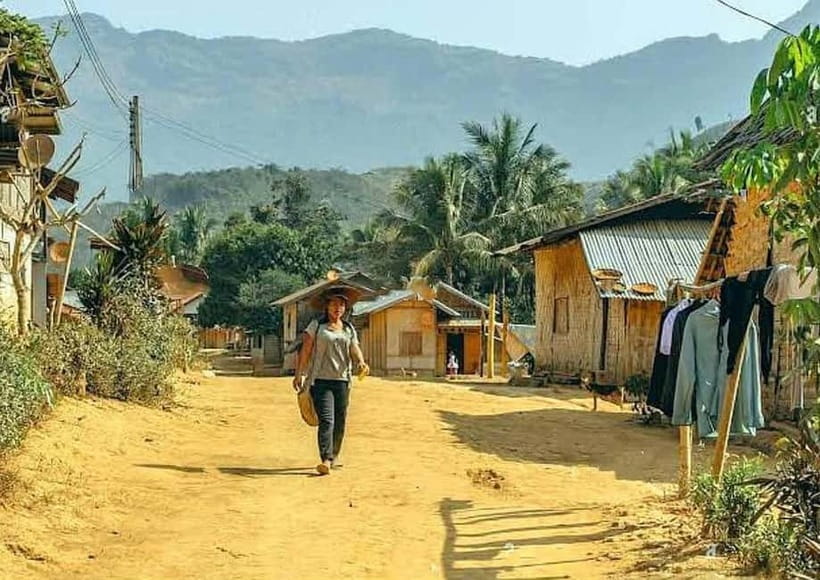
The first morning begins with pickup in Nong Khiaw, provided your location is within about five kilometers of town. You need to be ready at the agreed pickup point. The ride takes you toward the remote villages of Ban Naluang, with Lao, Khmu, and Hmong communities included along the route.
The exact village names can appear in slightly different forms in the tour description, including Ban Naluang Lao, Tai Lao, Lao Khmu, and Khmu Hmong. Do not let that wording worry you, but confirm the day’s route with the guide if you want a precise map of the stops.
The first walk introduces the countryside around these settlements. Expect uneven ground, forest paths, and changing weather conditions rather than a smooth park trail. A moderate to challenging rating is worth taking seriously, even though one person described the hike as challenging but manageable.
You stop for lunch and have time to walk through the village. This is one of the more valuable parts of the outing because the communities are presented as working places, not as a line of souvenir stalls. Children may greet you, and local people continue with their normal routines. You should still ask before taking close-up photographs and follow the guide’s lead around homes and community spaces.
The route continues toward a smaller Tai Lao, Khmu, and Hmong village. Here, you learn how to make bamboo handicrafts with help from a local villager. Bamboo is a useful material across much of Southeast Asia, and this workshop gives you something more meaningful than another short explanation from a guide. You handle the material and see how a local craft begins.
Do not expect a formal classroom or a polished commercial workshop. The value is in the contact and the process. Your finished item may be simple, but you will understand more about the skill involved.
An evening in the village
Dinner is prepared and eaten with villagers in the evening. This shared meal is a central reason to choose the overnight option instead of a standard day trek. You get time to ask questions, learn about food and daily life, and settle into a village rhythm.
The accommodation is in a village, but the supplied details do not promise a private room, hotel-style bathroom, or a particular bedding arrangement. You should be ready for simple conditions. Pack only what you need for the night, keep valuables protected, and bring a small towel and insect repellent.
The overnight stay also means you should respect local customs. Dress modestly, avoid loud behavior, and do not smoke, drink alcohol, or use drugs during the activity. The rules also ask you not to litter or touch plants. These are not fussy additions. You are walking through homes, farmland, and forest used by local people, so good manners matter.
The guide can make or break this part of the trip. Bick, also written as Bic, is the name most often associated with the experience. He is described as cheerful, easygoing, and eager to explain the land, people, and local history. If Bick is not assigned to your departure, ask who will guide you and how much English-language interpretation will be provided.
That last point matters. One French visitor found the guide’s English difficult to understand and wanted more explanation about village life. The positive guide comments are strong, but communication quality may depend on the individual guide and the group.
Day two: Boat travel, a cave, and Phanoi viewpoint
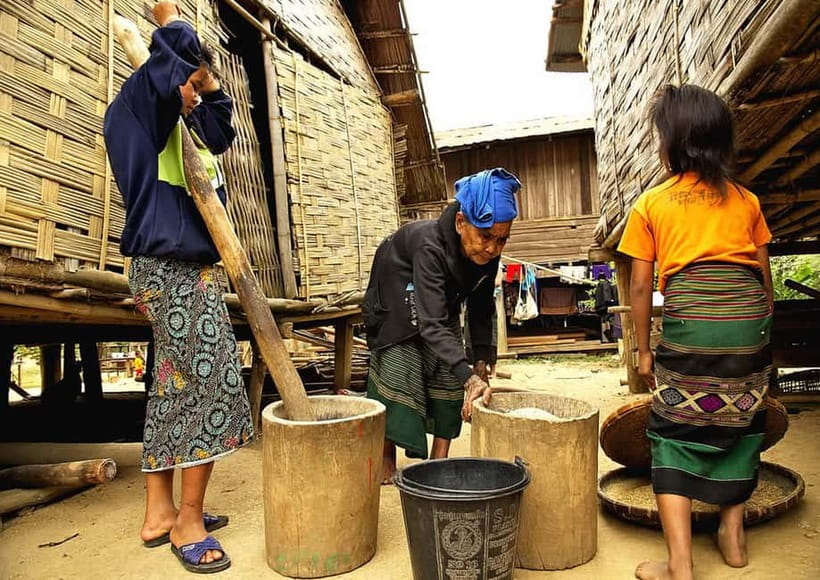
After breakfast, you take a boat toward Muang Noi village. The change from walking to river transport gives your legs a break and lets you see the Nam Ou from a different angle.
Muang Noi provides a chance to walk around the village and visit a historical cave. The cave adds context to the region beyond scenery. You also visit the Phanoi viewpoint, which brings the hills and river route into view from above.
The climb to the viewpoint is part of an already active day, so pace yourself. The itinerary does not give a precise climb time or explain the surface, which means you should expect uneven footing and follow the guide’s advice. Your guide can also explain the area’s past and point out details you might miss on your own.
Lunch comes before you continue to Sopkong village. This is a pleasant part of the schedule because the day does not rush from one attraction to the next. You have time to eat, walk, and look around before beginning the next section.
More Walking and Hiking Trips in the world:
- Halong Bay Full Day with Kayaking, Hiking viewpoint, Cave – Deluxe To Luxury
★ 5.0 · 884 reviews - Cas Cay – Kayak Hike and Snorkel Adventure
★ 5.0 · 870 reviews - Wailua River Kayak and Sacred Falls Guided Hike with Lunch
★ 5.0 · 783 reviews - Antelope Canyon Lake Powell: Guided Kayaking & Hike Tour
★ 4.9 · 369 reviews
Tad Mork Waterfall and the final river paddle
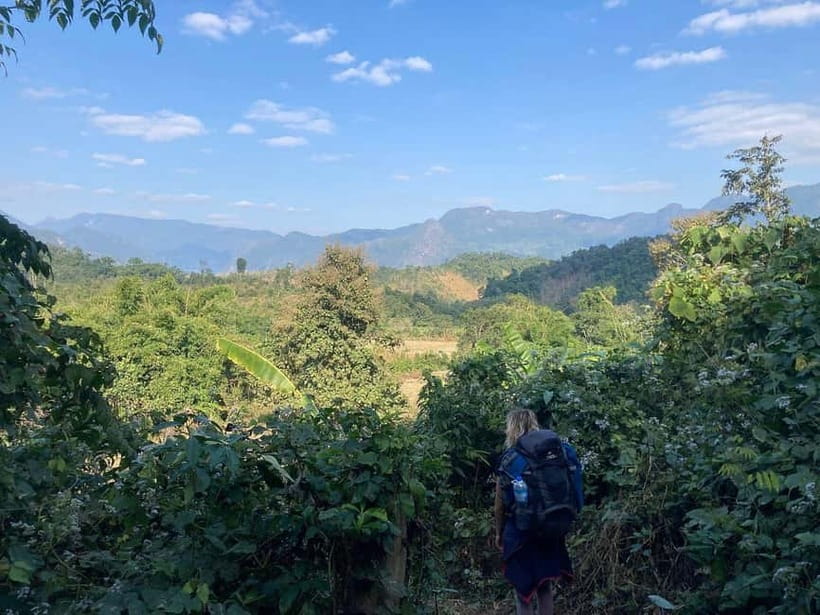
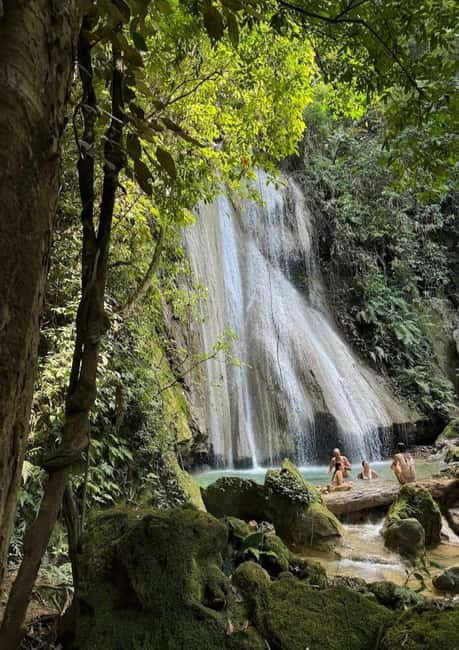
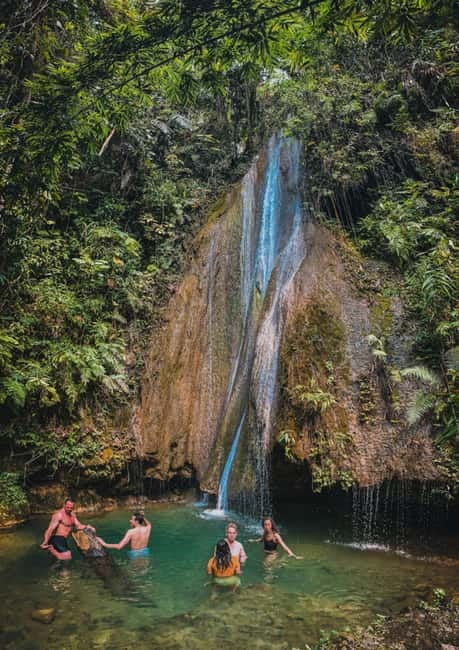
From Sopkong, you walk for about one hour to Tad Mork Waterfall. The waterfall pool is suitable for swimming, and the cool water should feel welcome after the forest trek.
Bring swimwear, a towel, and a way to keep your dry clothes protected. The tour includes the swim, but it does not promise changing rooms or other facilities, so use a simple day bag and pack with basic outdoor conditions in mind.
Tad Mork is not only a quick stop for a picture. It breaks up the walking and gives you a chance to cool down before the final activity. If you do not want to swim, you can still enjoy the setting, but you should remember that swimming is one of the main included features.
After returning to the riverbank, you begin the kayaking section downstream on the Nam Ou. The tone changes again. Instead of walking uphill or navigating forest paths, you move quietly with the current and watch the riverbanks pass by.
The route may offer views of many bird species, water buffalo, and fishermen. Wildlife sightings are never guaranteed, but the calm water makes observation possible. Keep your camera ready, but do not let it take over. The appeal here is the quiet: paddling, watching the banks, and seeing how the river fits into local life.
The kayaking is a fine ending because it is peaceful without being passive. You have already walked through villages and forest, so the river gives you time to absorb the trip before returning.
The guide question: why Bick matters
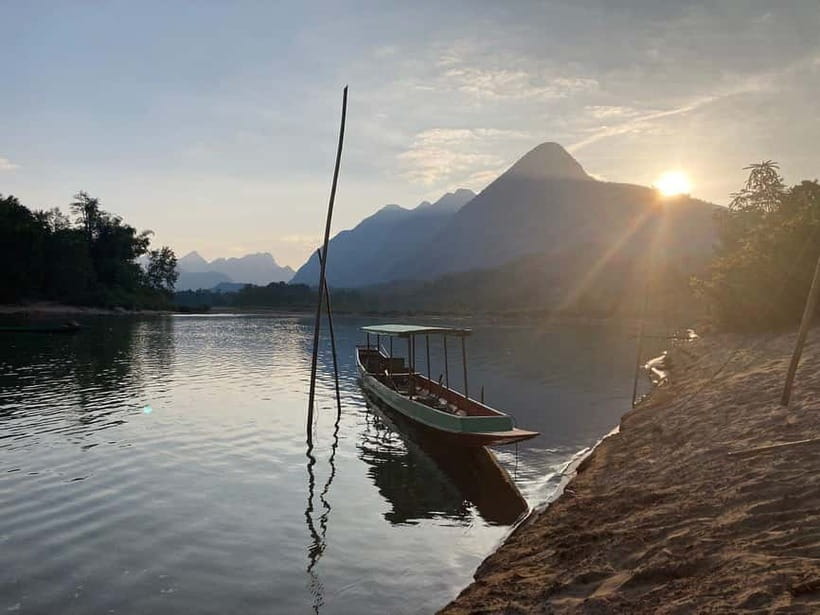
Guide quality carries extra weight on a small, active trip. Bick, or Bic, receives the clearest praise in the available feedback. He is described as friendly, positive, and generous with explanations about the area’s people, plants, and history.
That is important here because the route itself does not come with long museum labels or printed background notes. The guide is your connection between the places you see and the reasons they matter. A good guide can explain village customs, help with respectful behavior, and make the craft workshop more than a quick activity.
Still, I would not assume every departure will have the same guide. The experience is offered in English, yet one person found the explanations hard to follow and wanted more information. If cultural interpretation is your main reason for booking, ask in advance if Bick is available and request clear, detailed guiding.
The group information also deserves a check. It is described as a small group, and one booking detail shows a limit of one participant, while a separate account describes a group of four. Confirm the group size and setup before paying if you are traveling with friends or prefer a private departure.
How tough is the trek?
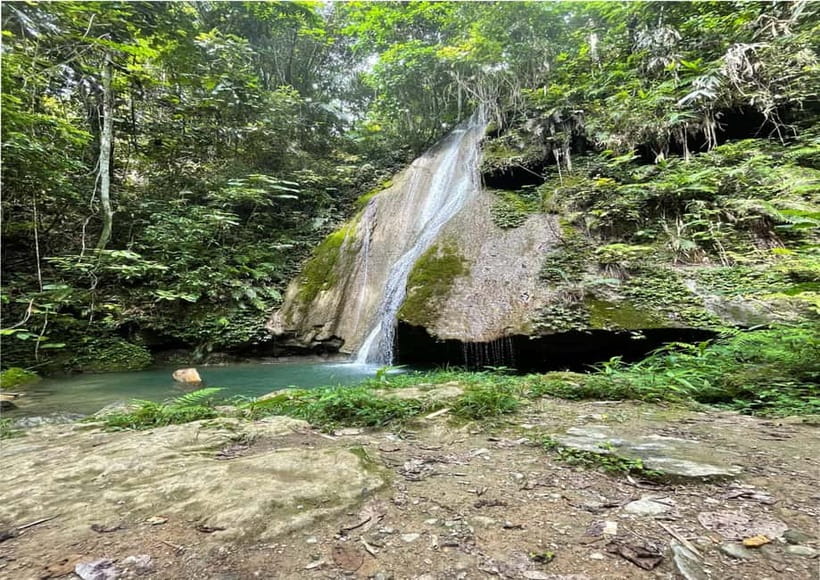
The walk is not a gentle stroll. You pass through primary forest and remote villages, and the tour clearly warns of moderate to challenging trekking. A person with a normal level of walking fitness may find it manageable, but that depends on weather, trail conditions, and your own pace.
Wear shoes with reliable grip. Comfortable clothing, a hat, sunscreen, water, snacks, and insect repellent all belong in your day bag. A refillable bottle is especially useful because the tour specifically advises you to stay hydrated.
The route is not suitable for children under eight, pregnant women, people with back problems, people with mobility impairments, or wheelchair users. That is a fair restriction given the forest trekking, village paths, boat travel, waterfall walk, and kayaking.
You should also be ready for weather changes. The tour runs through outdoor settings, and the itinerary does not promise shelter or a fixed indoor alternative. A light layer and protection for electronics make sense, though the supplied information does not specify a packing list for rain.
What makes the villages worth visiting
The strongest cultural feature is the lack of a staged, sales-focused feel. You visit Lao, Khmu, and Hmong communities where people continue with ordinary work and family life. That can feel quieter than a purpose-built cultural show, and that is exactly the point.
The tradeoff is that you need to bring your own curiosity. The villages are not described as formal attractions with displays in every home. Ask respectful questions, listen to the guide, and accept that some parts of village life may not be explained in detail.
The bamboo activity gives the visit a useful focus. Rather than simply walking through and taking photographs, you share a small practical task with a local person. It is a modest experience, but it creates a better connection to the place.
You should not touch plants, litter, smoke, or bring alcohol and drugs. These rules are especially important on a village and forest trip. Follow them, and you will be better prepared to visit respectfully.
Is $80 a fair price?
At $80 per person, the value depends on how much of the two-day package you will use. You receive a local guide, meals, village accommodation, the craft workshop, trekking, a waterfall visit, boat travel, and kayaking. Buying each part separately would require more planning and would not necessarily provide the same local access.
The price is strongest for people who want one organized route through several activities. You do not need to arrange a tuk-tuk, locate the villages, organize a boat, find Tad Mork, and then arrange a kayak on your own.
The price is less compelling if you want a soft adventure with hotel comfort or long periods of free time. This is an active rural trip with simple overnight arrangements. You are paying for access, guiding, meals, and coordination, not luxury.
Free cancellation up to 24 hours before the start and reserve-now, pay-later booking make planning easier. Starting times depend on availability, so check the departure options before finalizing your plans.
Who should book this Nong Khiaw trek?
I would choose this trip if you want to combine active walking with village contact and prefer a two-day story over a short excursion. It suits people who enjoy simple accommodation, local meals, forest paths, and outdoor variety.
It is also a good fit if you want to see more than Nong Khiaw town and the main river view. The route reaches small communities, a cave, a viewpoint, a waterfall, and the Nam Ou by kayak.
I would look elsewhere if you need reliable accessibility, dislike uneven trails, or want detailed cultural interpretation in polished English at every stop. The mixed guide feedback makes that a real consideration, not a small footnote.
Bring a camera, but also bring patience. The best moments may be a quiet village walk, a bamboo lesson, or a stretch of river where nobody is trying to sell you anything.
Should you book it?
Book this Nong Khiaw tour if you are fit enough for a moderate to challenging trek and want a close look at rural Lao life. The overnight village stay, bamboo craft session, Tad Mork swim, and Nam Ou kayaking give the trip a good mix of culture, walking, and water.
Before booking, confirm who your guide will be, especially if you hope to travel with Bick or Bic, and check the group size. If you accept simple conditions and prepare well, this is a strong-value way to spend two days outside Nong Khiaw.
FAQ
How long is the Nong Khiaw trekking experience?
The experience lasts two days and includes trekking, village visits, an overnight stay, boat travel, a waterfall visit, and kayaking.
What villages does the tour visit?
The route includes Ban Naluang and communities identified as Lao, Khmu, Tai Lao, and Hmong. It also includes Muang Noi and Sopkong villages.
Is accommodation included?
Yes. The tour includes overnight accommodation in a village, along with dinner on the first evening and breakfast the next morning.
Are meals included?
Lunch and dinner are included, as well as breakfast after the overnight stay.
Is the trek difficult?
The trek is described as moderate to challenging. Suitable footwear is essential, and you should bring water, snacks, and comfortable clothing.
Can I swim during the tour?
Yes. The itinerary includes swimming at Tad Mork Waterfall. Bring swimwear and a towel.
Is kayaking included?
Yes. After visiting Tad Mork Waterfall, you return to the riverbank and kayak downstream on the Nam Ou River.
Is pickup available in Nong Khiaw?
Yes. Pickup is available from hotels or locations within Nong Khiaw city, up to five kilometers away. You must be ready at the pickup location.
Who is this tour not suitable for?
It is not suitable for children under eight, pregnant women, people with back problems, people with mobility impairments, or wheelchair users.
More 2-Day Experiences in the world
- All-Inclusive 2 Day/1 Night Halong Luxury Cruise, Meals, Cave, Kayaking,Swimming
★ 5.0 · 668 reviews - CozyBay Boutique 2D1N Kayak, Swiming ,Titop, Cave, Expressway way
★ 5.0 · 619 reviews - Halong Bay 2D1N Cruise multi options, transfer, swim and kayaking
★ 5.0 · 441 reviews - HaLong, LanHa bay 2days and 1 nite Kayak on Vega Legend Cruise.
★ 5.0 · 386 reviews
Just added around the world
- Night Mangrove Kayak Tour★ 5.0 · 9 reviews
- Paddle Boarding Lesson in Bonaire (SUP)★ 5.0 · 7 reviews
- Canoeing on the Elbe river from Děčín to Bad Schandau★ 3.5 · 5 reviews
- 1 Hour Mangrove Kayak Tour★ 5.0 · 7 reviews
- 2 Hour Mangrove Kayak and Snorkel Tour★ 5.0 · 42 reviews
- Canoeing on the Elbe river + Bike rental from Děčín to Bad Schandau★ 4.5 · 21 reviews
- Guided Clear Kayak Tour in Bled★ 5.0 · 53 reviews
- From Bled: Black Hole Kayaking★ 5.0 · 76 reviews
Laos Kayak Tours, compared.
Vang Vieng: Kayaking & Cave Tubing with Zip Line/Blue Lagoon
Read our review →
Vang Vieng: Tham Nangfar and Tham Nam Day Tour with Kayaking
Read our review →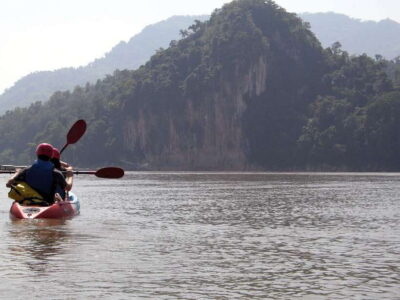
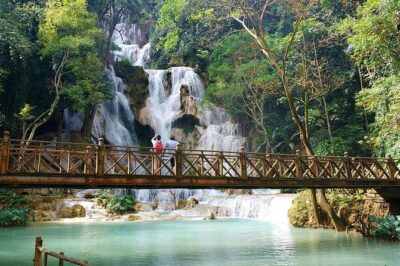
FULL DAY – Kuang Si Waterfall, Kayak on the Nam Ou / Mekong River, Pak Ou Caves
Read our review →
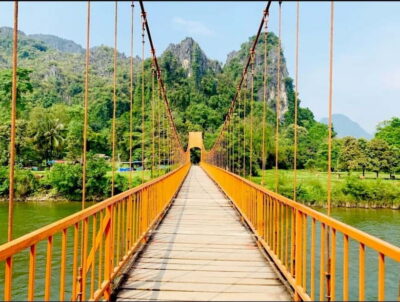
From Vientiane: Vang Vieng Tour with Cave Kayak & Zipline
Read our review →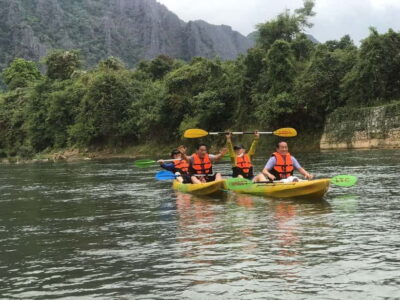
Vang Vieng: Day Tour with Kayaking, Ziplining, and Rafting
Read our review →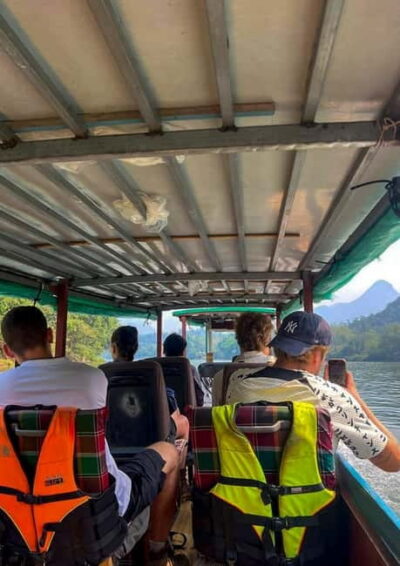
Nong Khiaw: Muang Ngoi, View Point, Water Fall and Kayaking
Read our review →Browse the lists this tour appears in