
Review · NEW ZEALAND KAYAK TOURS
Akaroa: Akaroa Marine Reserve Sea Kayaking Tour
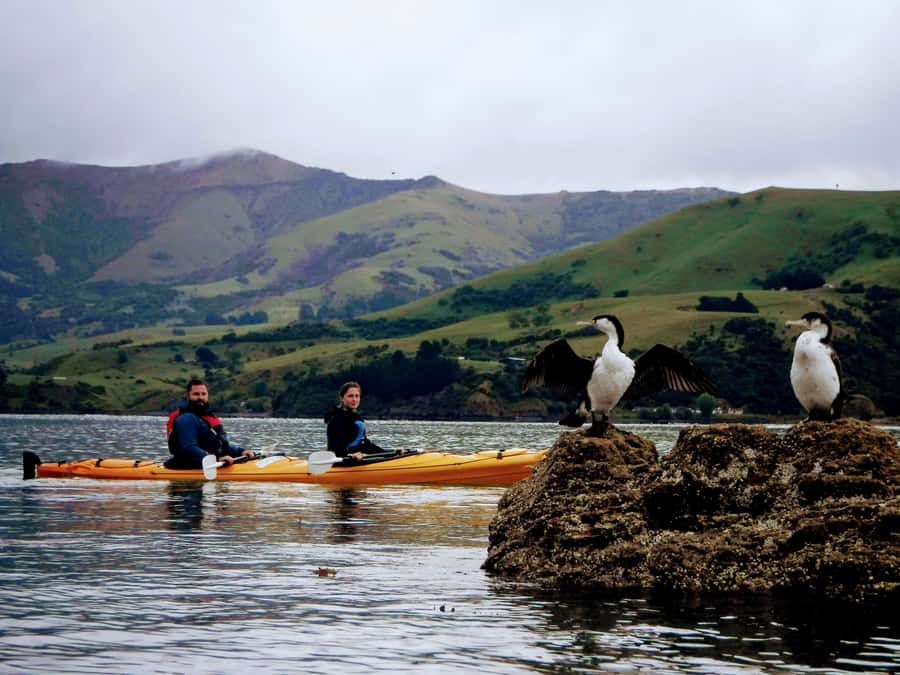
Akaroa’s best scenery is not all on shore. From a sea kayak, you paddle inside an extinct volcanic crater that has been flooded by the sea, with steep coastal slopes, caves, quiet bays, and clear water all around you. Keep watch for Hector dolphins, fur seals, penguins, and seabirds, but remember that wildlife is never guaranteed.
I like the small groups, with one guide for up to eight people, and I like the mix of gentle sightseeing and real exercise. Guides including Alex, Max, Lucia, William, and Thomas have earned praise for clear safety help and lively local knowledge. The catch is simple: wind can make the return paddle tiring, and one trip had plenty of waves, so this is not a passive boat cruise.
Key points at a glance
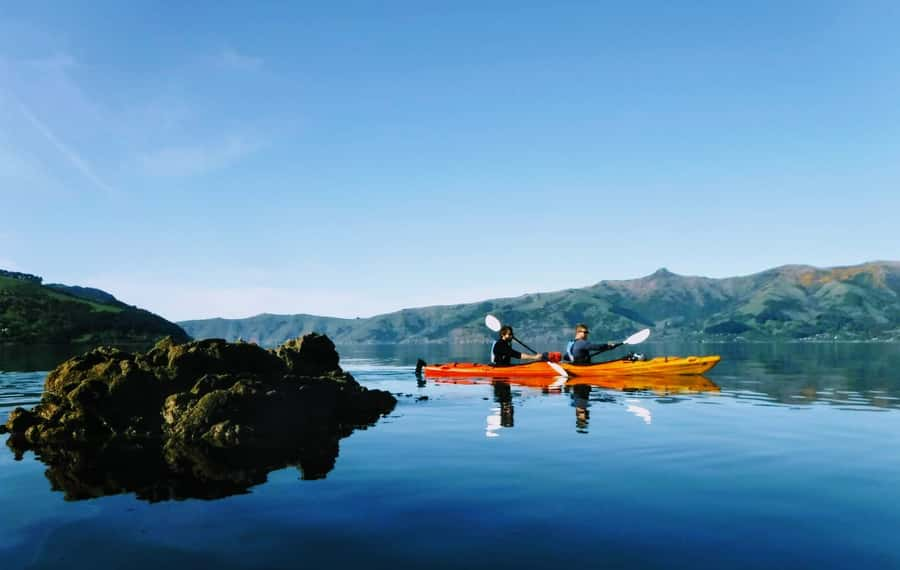
- Paddle inside a sea-flooded volcanic crater: Akaroa Harbour gives you dramatic geology as well as open-water views.
- Look for rare local wildlife: Hector dolphins, white-flippered penguins, fur seals, and many seabirds may appear.
- Small groups keep the outing personal: One guide leads a maximum of eight people.
- Guides make the difference: Alex, Max, Lucia, William, Thomas, and others are praised for safety, humor, and local information.
- Allow for a workout: The kayaks are stable and suitable for different ability levels, but wind and waves can add effort.
- Good value at $80: You get 2.5 hours on the water, equipment, instruction, a safety briefing, a guide, and photos.
Why Akaroa Harbour is made for a kayak trip
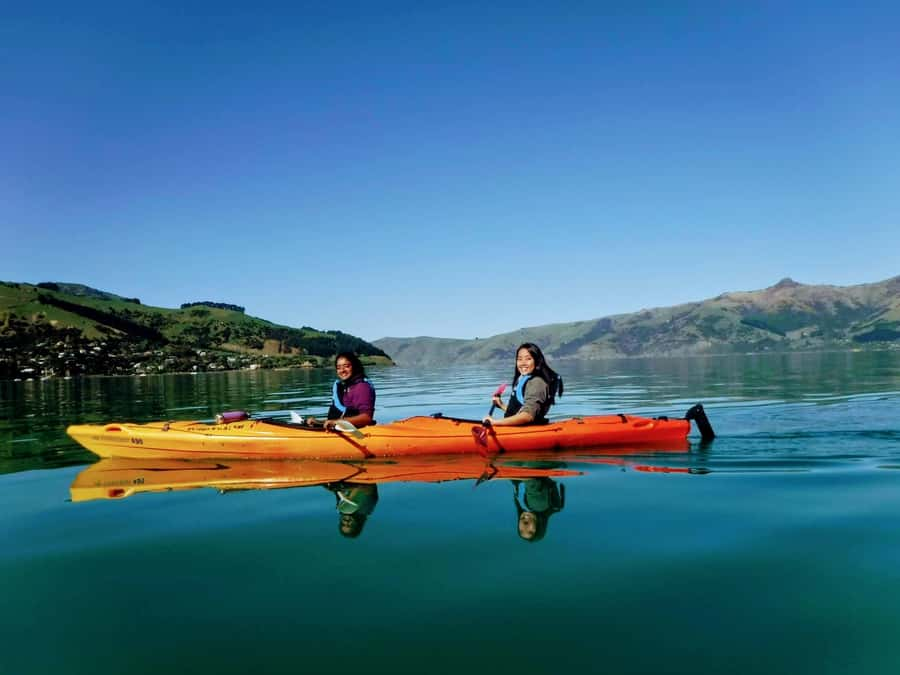
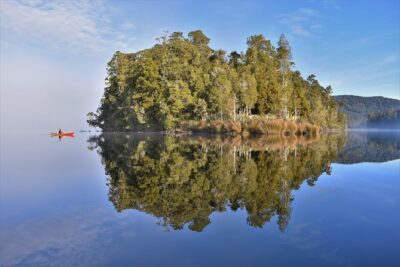
Akaroa Harbour is the sea-filled remains of a volcanic crater. That sounds like a geology lesson, but from a kayak it becomes easy to understand. You are not just looking at a distant mountain or reading a sign. You are moving through the watery space shaped by ancient volcanic activity.
The harbour includes sheltered inlets, bays, caves, and rocky features that are difficult to appreciate from a road. A kayak keeps you close to the water without the engine noise of a larger boat. That makes it easier to hear the guide, watch birds, and notice small changes in the shoreline.
The water can look calm and inviting, but conditions are not fixed. Wind may rise during the tour, particularly on the way back, and paddling against waves can turn a relaxed outing into a proper workout. I would treat this as a nature trip with exercise included, not as a sightseeing ride where you simply sit back.
Akaroa is about 80 minutes from Christchurch, so the tour works well as part of a Banks Peninsula day. You will need to plan your own way there, but the distance makes it a practical outdoor add-on if you are based in Christchurch and want something more active than another town walk.
More Sea Kayaking in New Zealand
- Wildlife Sea Kayaking Tour – Kaikoura
★ 5.0 · 467 reviews - Shore Excursion Guided Sea Kayaking through Akaroa Marine Reserve
★ 5.0 · 160 reviews - Sunrise wildlife sea kayaking in Akaroa marine reserve
★ 5.0 · 123 reviews
Meeting the guide beside the bowling club
The meeting point is opposite the bowling club, at the picnic benches on the grass. This is a useful detail because the tour does not begin at a large visitor center with obvious signs and crowds. Give yourself enough time to find the benches, get organized, and leave large bags behind.
Bring a reusable water bottle, sunscreen, a sun hat, and a light wind or rain jacket. Akaroa can look sunny from shore while the water feels cooler and breezier. A windbreaker is especially useful if the weather changes during the 150-minute outing.
Large bags and luggage are not allowed. That makes sense in a kayak, where space is limited and loose belongings can get in the way. Keep your packing simple: water, sun protection, and one extra layer are the useful basics.
The tour is offered with guides who speak English, Spanish, or French. The guide leads a maximum of eight people, which matters more than it may sound. A small group allows the guide to keep an eye on paddling technique, adjust the pace, and answer questions without turning the outing into a noisy procession.
Getting comfortable in the kayak
Before setting off, you receive the kayaking gear, basic instruction, and a safety briefing. The kayaks are described as stable and comfortable, and the experience is presented as suitable for all abilities. That does not mean you need no effort, but it does mean the trip is designed for beginners as well as people who already have some paddling experience.
The early instruction is important for nervous paddlers. One family member who felt apprehensive was put at ease by the guides, while another participant appreciated being helped individually into the kayak. That kind of attention is exactly what you want before leaving the shore.
The available feedback also includes people who would have preferred single kayaks, while another group enjoyed traveling in double kayaks. You may therefore want to check the current setup when booking if the choice between a single and double kayak matters to you. The supplied equipment and small-group format are the main points, but the exact kayak arrangement may vary.
Expect to paddle rather than simply float. A gentle rhythm will take you farther with less strain than short, hard strokes. If you are new to kayaking, listen closely to the guide at the start and do not be embarrassed to ask for a correction. The best guides on this trip are praised for keeping people safe and confident without making beginners feel awkward.
Following the harbour into quiet bays
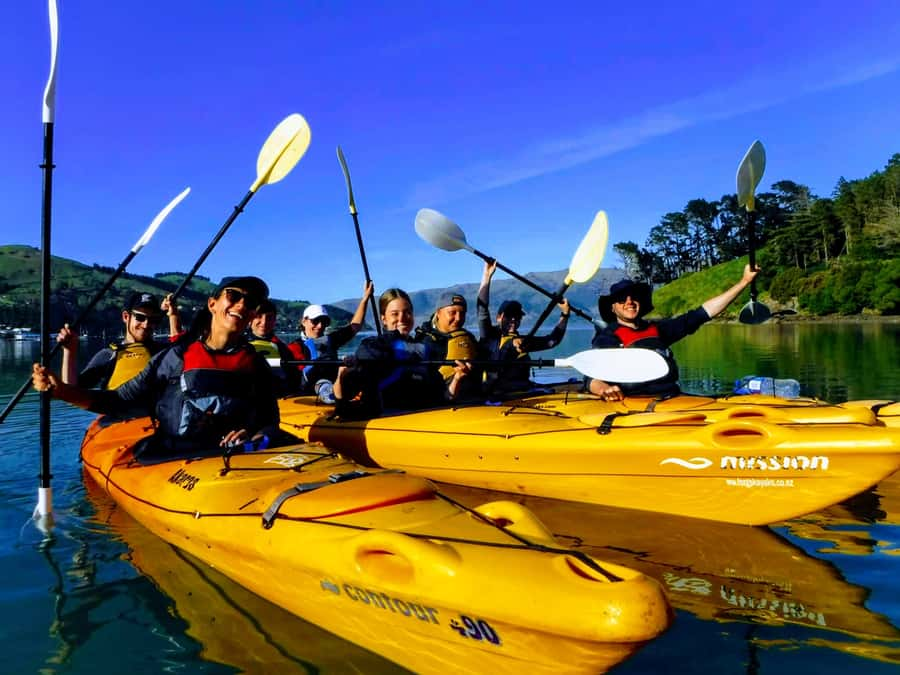
Once the group gets moving, the appeal is the change in viewpoint. Akaroa’s shoreline unfolds at water level, and the guide can point out coastal features as you pass. The tour explores serene inlets and bays, where the pace can feel quiet even though you are working your arms.
This is a good part of the trip for noticing the smaller details. The guide may explain the area’s geology, marine life, and birdlife while you paddle. Guides such as Max and Thomas are especially praised for making conversation easy and sharing information about Akaroa beyond a list of facts.
The 2.5-hour duration gives the outing enough time to feel like a real excursion. A shorter trip might provide a quick taste of kayaking, but this length allows time to settle into the boat, explore several harbour features, and pause for wildlife watching. It also means you should not arrive expecting a quick, effortless activity.
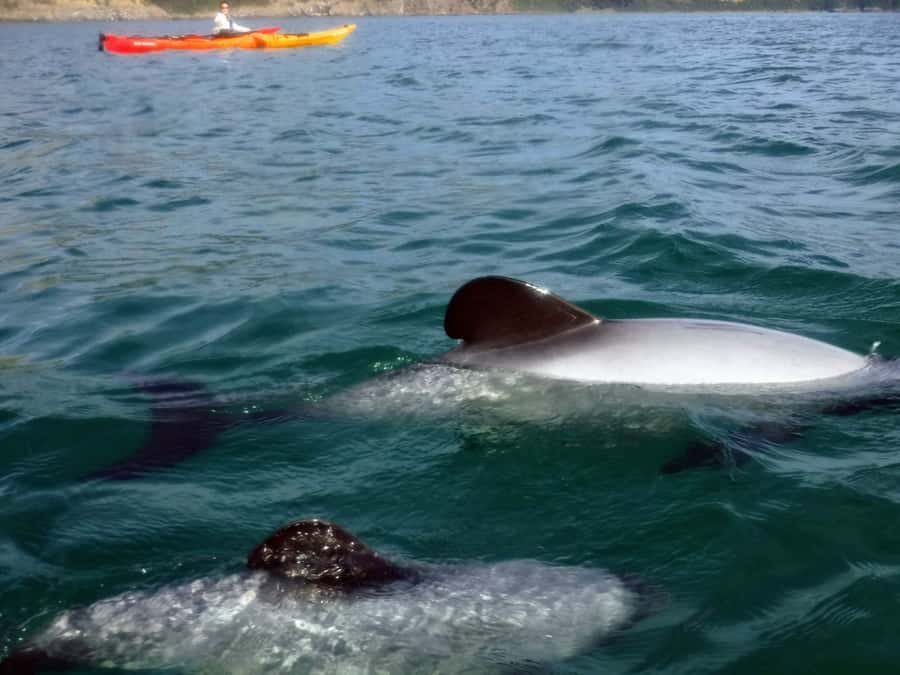
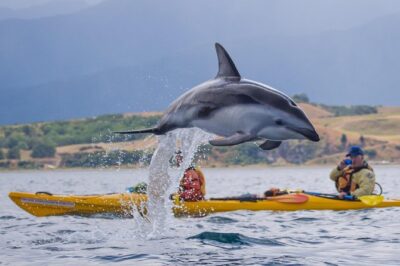
The group does not need to rush. The guide keeps the party together and watches conditions, participants, and wildlife opportunities. One guide described following dolphin activity patiently before a dolphin surfaced between the kayaks. That moment cannot be scheduled, but the slow approach gives you a better chance than a hurried paddle from one fixed stop to another.
More National Park Paddles in New Zealand:
- Small group guided sea kayaking in Akaroa marine reserve
★ 5.0 · 116 reviews - Oarsome Marine Reserve Kayak Tour
★ 5.0 · 39 reviews - Mārahau: Abel Tasman Marine Reserve Kayak Tour
★ 4.9 · 22 reviews - Abel Tasman National Park: Cruise, Kayak, & Hike Tour
★ 5.0 · 9 reviews
Caves, cliffs, and volcanic features
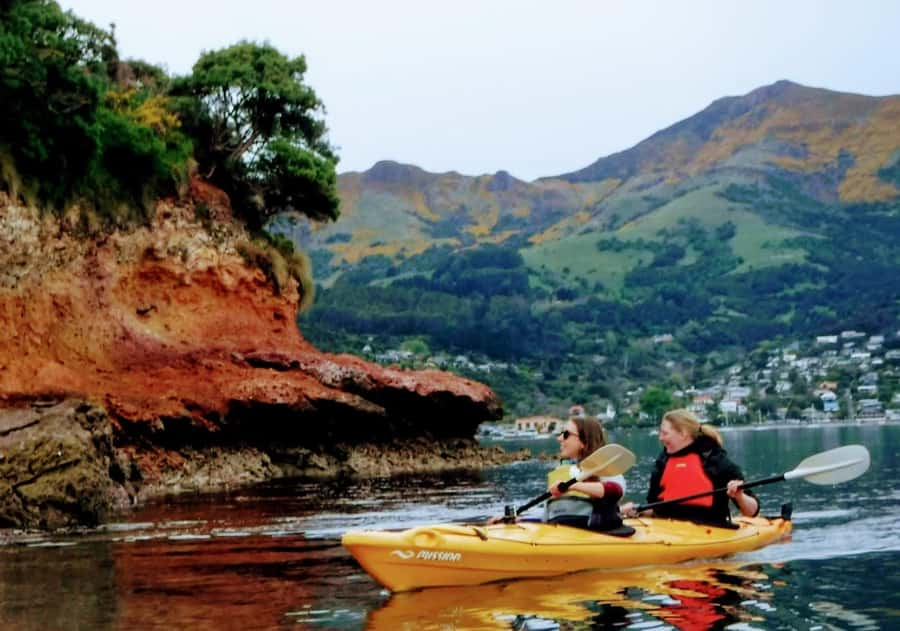
The caves are among the most interesting details of the route. You may have chances to paddle near or into some of them, depending on conditions and the guide’s judgment. They add variety to the outing and make the volcanic setting feel more immediate.
The rocky formations also give the guide natural talking points. William, for example, was praised for explaining both wildlife and geological features while helping people stay confident on the water. This combination matters because the scenery is stronger when you understand what shaped it.
Do not expect a formal sequence of stops with long walks ashore. The tour is built around paddling, viewing, and listening from the kayak. If you want a land-based history tour with lots of time on dry ground, this will not be the right format. If you like learning while moving through a place, it fits well.
The scenery is a major reason to book even if you see no animals. One participant enjoyed the crater and caves without a wildlife sighting, and still found the guide and kayaking worthwhile. That is the sensible way to judge the experience: wildlife is a bonus, while the harbour and volcanic setting are the dependable attractions.
Wildlife watching without a guarantee
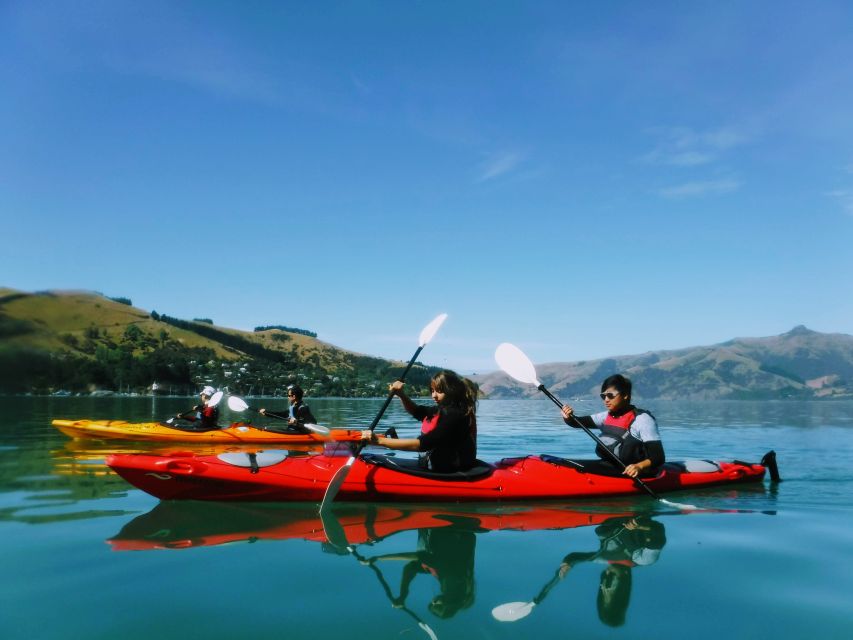
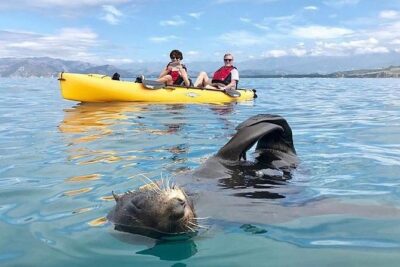
Akaroa is a strong place to look for marine life. The area is home to Hector dolphins, one of New Zealand’s native dolphin species, along with fur seals, white-flippered penguins, seabirds, and other marine creatures. The tour operates in a marine reserve, so the setting has real ecological value beyond its good looks.
Hector dolphins may swim near the kayaks, and one outing had dolphins remain around the group for an extended time. Seals and penguins have also been spotted. These encounters can be extraordinary because a kayak places you close to the water without the barrier of a high deck or the sound of a large motor.
Still, you should book for the setting, not for a guaranteed animal encounter. Another outing had no wildlife sightings at all, but the volcanic crater, caves, and guide still made it worthwhile. Wildlife follows its own schedule, and the guide can look, wait, and explain, but cannot produce dolphins on demand.
The best approach is to keep your eyes moving. Check the water near the kayaks, scan the shoreline, and look toward rocks and caves where birds or seals may appear. Listen when the guide points out a possibility, but avoid expecting constant action. Much of the pleasure comes from being quiet enough to notice what is there.
What the guides add to the experience
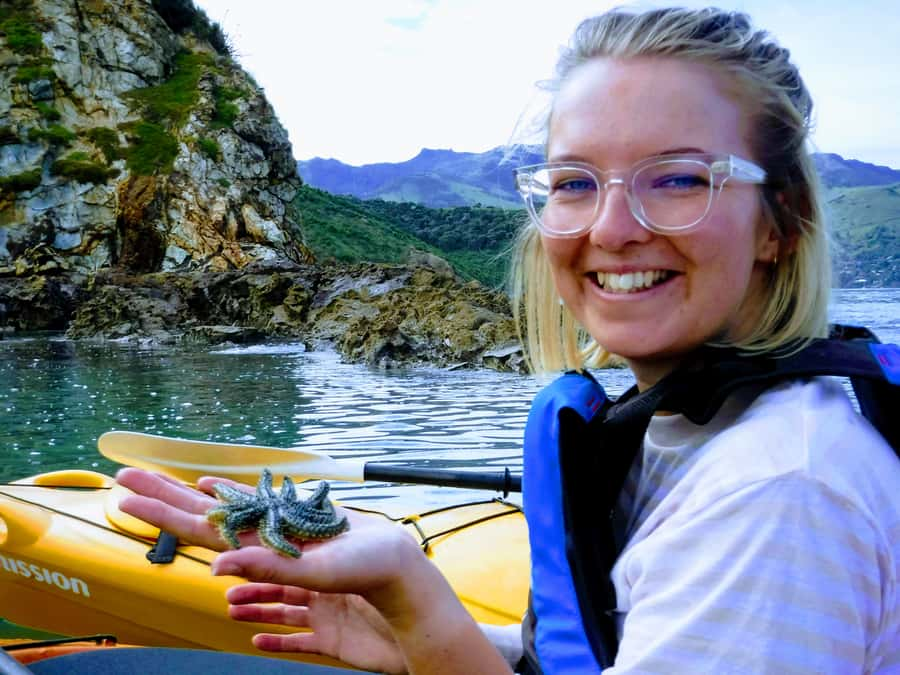
The strongest part of this tour is the guide service. Alex is praised for combining wildlife information with an enjoyable pace. Max is described as friendly and well informed, while Lucia is praised for both her guiding and her ability to keep the outing relaxed.
Other guides receive similar attention. William helped participants feel safe while explaining geology and wildlife. Thomas brought a warm, conversational style and a strong knowledge of Akaroa. Adam encouraged the group when wind and waves made the return more exciting.
That range of guide styles is useful to keep in mind. You are not booking a silent equipment rental. The guide shapes the experience by choosing the route, watching the weather, explaining what you see, and helping less confident paddlers. The maximum group size of eight supports that personal approach.
The guides also seem comfortable with mixed ability levels. Experienced paddlers can enjoy the scenery without feeling held back, while beginners get instruction and encouragement. If you are nervous, say so early. A good guide can adjust advice and reassure you before small worries become a problem.
Wind, waves, and the fitness question
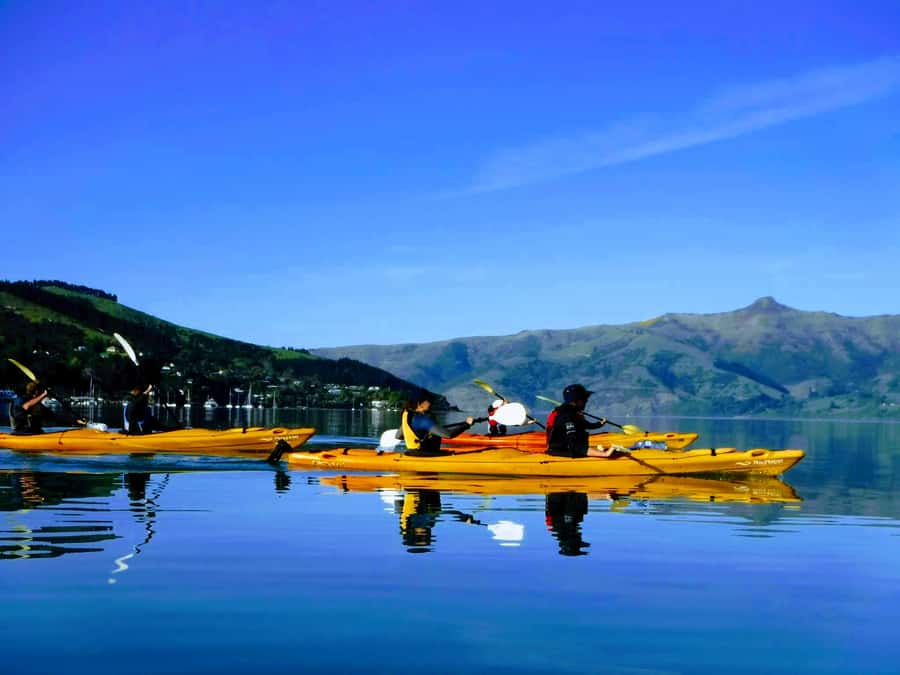
The tour is suitable for different ability levels, but you still need enough mobility and energy to paddle for 150 minutes. Some people describe it as a good workout, and one participant specifically advised bringing some arm strength. That is fair advice.
Conditions may be calm, but they can change. Wind came up for one group on the return, creating plenty of waves. The guide’s encouragement helped, but you should understand that weather can alter the character of the trip. A sheltered start does not promise a completely smooth finish.
If you are unsure about your fitness, consider how you feel about steady upper-body exercise in the open air. You do not need to be an athlete, but you should be willing to paddle and follow instructions. Wear practical clothing that can handle spray and bring the windbreaker requested by the operator.
The stable kayaks help, particularly for first-timers, but stability is not the same as guaranteed stillness. The water moves, paddles get wet, and conditions can become more demanding. For many people, that is part of the fun. For others, it may be the main reason to choose a land-based Akaroa activity instead.
Is $80 good value?
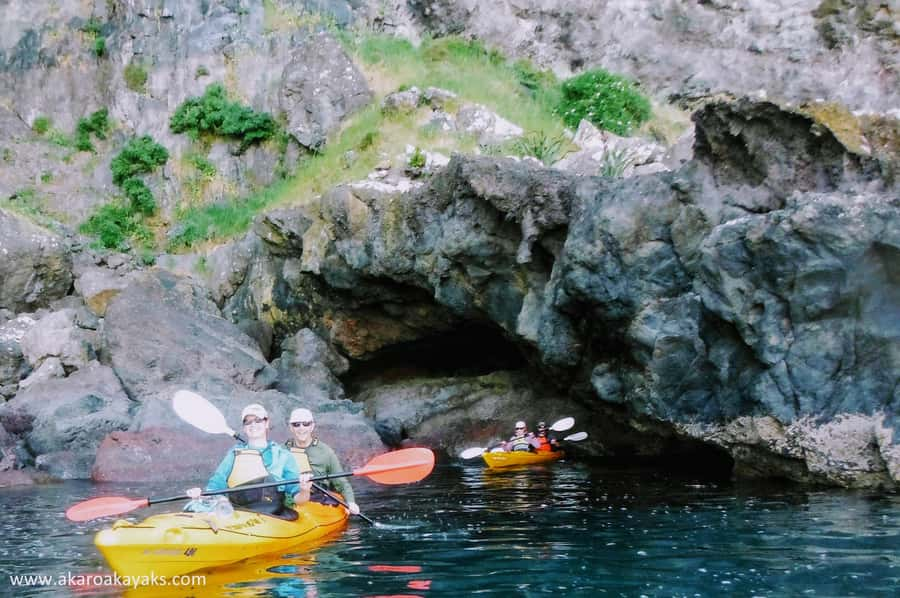
At $80 per person, this is a fair price for a 2.5-hour guided outing in one of Akaroa’s most scenic settings. You are paying for the kayak, paddling equipment, instruction, safety briefing, guide, and photos, not just access to the water.
The value improves if you want more than a short introduction. The guide’s local information, wildlife search, and attention to safety make the experience different from renting equipment and paddling alone. The small group also matters because one guide serves no more than eight people.
The price is less attractive if you only want a guaranteed wildlife encounter. There is no promise of dolphins, seals, or penguins, and weather may make the paddle harder than expected. I would compare it with other activities based on your interest in kayaking and the harbour itself, not on a checklist of animal sightings.
The reserve setting and low-impact approach add another reason to choose it. The tour is designed to leave minimal impact on the marine environment, and a kayak creates less disturbance than a powered sightseeing vessel. That does not make the trip free of environmental impact, but it is a sensible way to explore a fragile coastal area.
Who should book this Akaroa kayak tour?
I would recommend it to active adults, families with older children, couples, and solo visitors who like a guided outdoor experience. It is also a good option if you are staying in Christchurch and want a memorable half-day outing about 80 minutes away.
Beginners should feel comfortable booking, particularly if they are nervous but open to instruction. The guide-to-participant ratio, stable equipment, and repeated praise for patient safety help make the trip approachable.
You should think twice if you dislike wind, exercise, or the possibility of getting splashed. You should also avoid treating the tour as a guaranteed dolphin trip. The wildlife may be wonderful, but the reliable elements are the harbour, crater, caves, scenery, and guide-led paddle.
Free cancellation is available up to 24 hours before the activity for a full refund, and you can reserve now and pay later. Check the available start times when booking, since the total duration is 150 minutes and you will need to fit it around transport to Akaroa.
My verdict
I would book the Akaroa Marine Reserve Sea Kayaking Tour if I wanted to experience the harbour from the water and did not mind doing some work for the views. The volcanic crater, caves, and small-group format give it substance even on a day when wildlife stays out of sight.
Book it for the setting and the guiding, then welcome dolphins, seals, penguins, and seabirds as a bonus. Pack light, bring water and sun protection, accept that wind may make the return paddle lively, and you will be prepared for the experience this tour actually offers.
FAQ
How long is the Akaroa sea kayaking tour?
The tour lasts 150 minutes, or 2.5 hours.
How much does the tour cost?
The listed price is $80 per person.
Where do I meet the guide?
Meet opposite the bowling club at the picnic benches on the grass in Akaroa.
What wildlife might I see?
You might see Hector dolphins, white-flippered penguins, fur seals, seabirds, and other marine life. Sightings are possible but not guaranteed.
What should I bring?
Bring drinking water in a reusable bottle, sunscreen, a hat, and a light wind or rain jacket.
Is cancellation available?
Yes. You can cancel up to 24 hours in advance for a full refund. You can also reserve your place and pay later.
Just added around New Zealand
- Motukorea / Browns Island Sea Kayak Journey★ 5.0 · 35 reviews
- Browns Island Motukorea Sea Kayak Tour★ 5.0 · 9 reviews
- Auckland Bioluminescence Kayak Tour★ 5.0 · 31 reviews
- Auckland City Lights Night Kayaking Tour★ 5.0 · 21 reviews
- Small group guided sea kayaking in Akaroa marine reserve★ 5.0 · 116 reviews
- Sunrise wildlife sea kayaking in Akaroa marine reserve★ 5.0 · 123 reviews
- Guided Electric Mountain Bike & Sea Kayak Tour in Akaroa★ 5.0 · 22 reviews
- Tauranga: Daytime Scenic Lake McLaren Kayak Tour★ 4.6 · 16 reviews
New Zealand Kayak Tours, compared.
Small-Group Kayak Adventure from Franz Josef Glacier
Read our review →
Dart River Canoe and Jet Boat Experience from Queenstown
Read our review →Browse the lists this tour appears in